
Plants
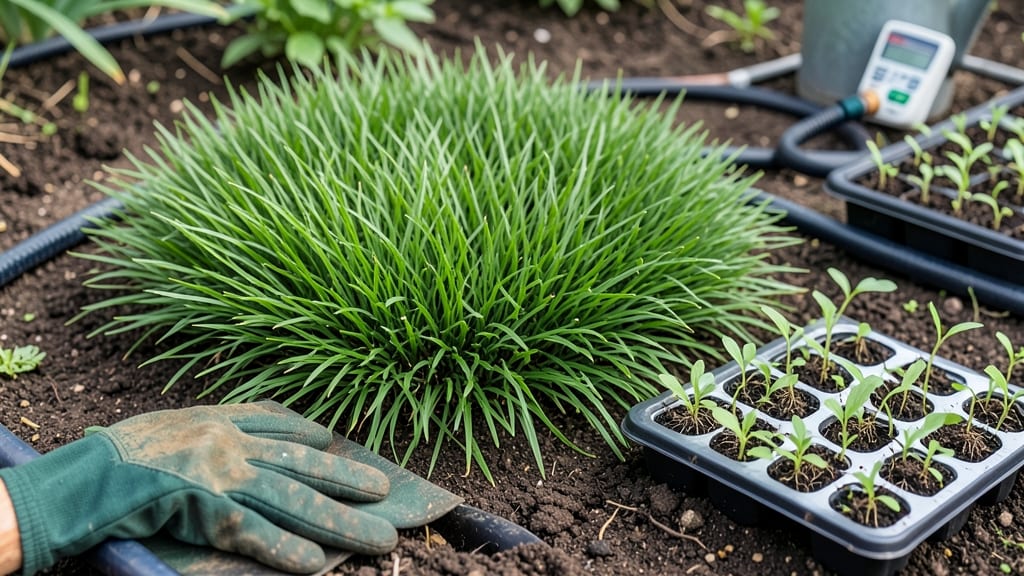
If you're asking "when is the best time to plant Bermuda grass in Texas", the answer isn't just about avoiding frost—it's about catching that sweet spot between 65°F soil and summer's relentless heat.
Plant too early, and your 🌱 Bermuda grass struggles with cool temperatures. Too late, and you're fighting drought stress before roots even take hold.
Texas' 8a-10b zones create a unique challenge, where North Texas lawns need a different approach than South Texas' year-round warmth. The key isn't just picking a month—it's reading your microclimate like a pro.
I'll show you exactly how to time your planting for fast establishment, whether you're in the Panhandle or the Rio Grande Valley.
Most gardeners make one critical mistake: they focus only on calendar dates instead of soil conditions. That's why I'm breaking down the real indicators of perfect planting time—from soil thermometers to rainfall patterns—that Texas A&M AgriLife recommends.
These aren't just theories; they're battle-tested strategies for thick, drought-resistant Bermuda grass that stays green when others give up.
Ready to transform your lawn from patchy to picture-perfect? Let's dive into the heat-zone map and planting secrets that will have your Bermuda grass looking like a pro's work in just 8 weeks. The best time isn't a mystery—it's a science, and I've got all the details.
Texas heat-Zone map: optimal planting windows by region
Texas’ diverse climate means Bermuda grass planting windows vary dramatically from North Texas to South Texas. In Zone 8a (North Texas), like Dallas, you’ll want to plant after April 15 to avoid late spring frosts that can kill tender seedlings.
Meanwhile, in Zone 10b (South Texas), such as Brownsville, the ideal window stretches from March 15 to May 15, where heat arrives earlier and stays longer.
Central Texas (Zones 8b-9a, including Austin and San Antonio) offers a 6-week window from April 1 to May 15. This region’s unpredictable weather—one day 80°F, the next 40°F—demands flexibility. Use soil thermometers to confirm 65°F+ soil temps before planting, as cold soil slows germination by 50%.
The key isn’t just avoiding frost—it’s timing germination with Texas’ summer heat. Planting too early in cooler zones risks weak root systems before the heat sets in, while planting too late in hotter zones stresses seedlings with intense afternoon sun.
Think of it as a balance between heat and moisture.
Here’s how to adapt your planting schedule based on your Texas region:
For North Texas, aim for late April when nighttime temps stay above 50°F. Use row covers if an unexpected frost warning pops up.
In Central Texas, early April plantings can work if you’re willing to monitor soil temps daily—but May is the safer bet for most homeowners. Meanwhile, South Texas gardeners should plant by April 15 to avoid 100°F+ shade temps that stress seedlings.
Pro tip: Check the Texas A&M AgriLife Extension frost forecast and align your planting with their 30-day outlook. They update weekly and account for microclimates that local weather apps often miss.
For example, a valley in Hill Country might frost while a nearby hillside doesn’t—a difference of 10°F in just 1 mile.
If you’re in transition zones like East Texas (Zone 8a) or West Texas (Zone 8b), err on the side of late planting. These areas experience rapid temperature swings, and Bermuda grass needs
Signs your Bermuda grass planting timing is perfect (or terrible)
Timing your Bermuda grass planting isn’t just about checking a calendar—it’s about reading your Texas landscape’s cues. The soil temperature is your first clue: aim for 65°F or warmer at 4 inches deep. Use a soil thermometer to confirm before planting, as cooler soils slow germination and invite fungal risks.
Next, watch the weather forecast for at least 2 weeks of stable conditions. Unpredictable rain or extreme heat (above 95°F) can stress young seedlings. I always check for consistent humidity levels—too dry, and your grass struggles to establish roots; too wet, and you risk rot.
🌱
If you see yellowing leaves or slow germination after planting, your timing might be off. These signs often mean the soil was too cool or too dry.
In North Texas, I’ve seen planting delays in early April backfire when unexpected 32°F nights hit—always have a backup plan for late spring plantings.
For South Texas, the real danger is overheating. Planting in mid-June can stress seedlings before they establish. My trick? Start with shade cloth for the first 2 weeks if temps exceed 90°F consistently. This buys time for roots to develop before the peak summer heat.
Don’t ignore the moisture level either. Bermuda grass needs 1 inch of water weekly during establishment, but soggy soil is just as harmful. Use a moisture meter to check—if it reads above 40% saturation, hold off on watering until the top inch dries slightly.
Finally, trust your local extension office. Texas A&M AgriLife provides free heat-zone maps that account for microclimates in your area. For example, Austin’s urban heat island effect can make planting 2 weeks earlier than rural areas—always verify before committing to a schedule.
✂️