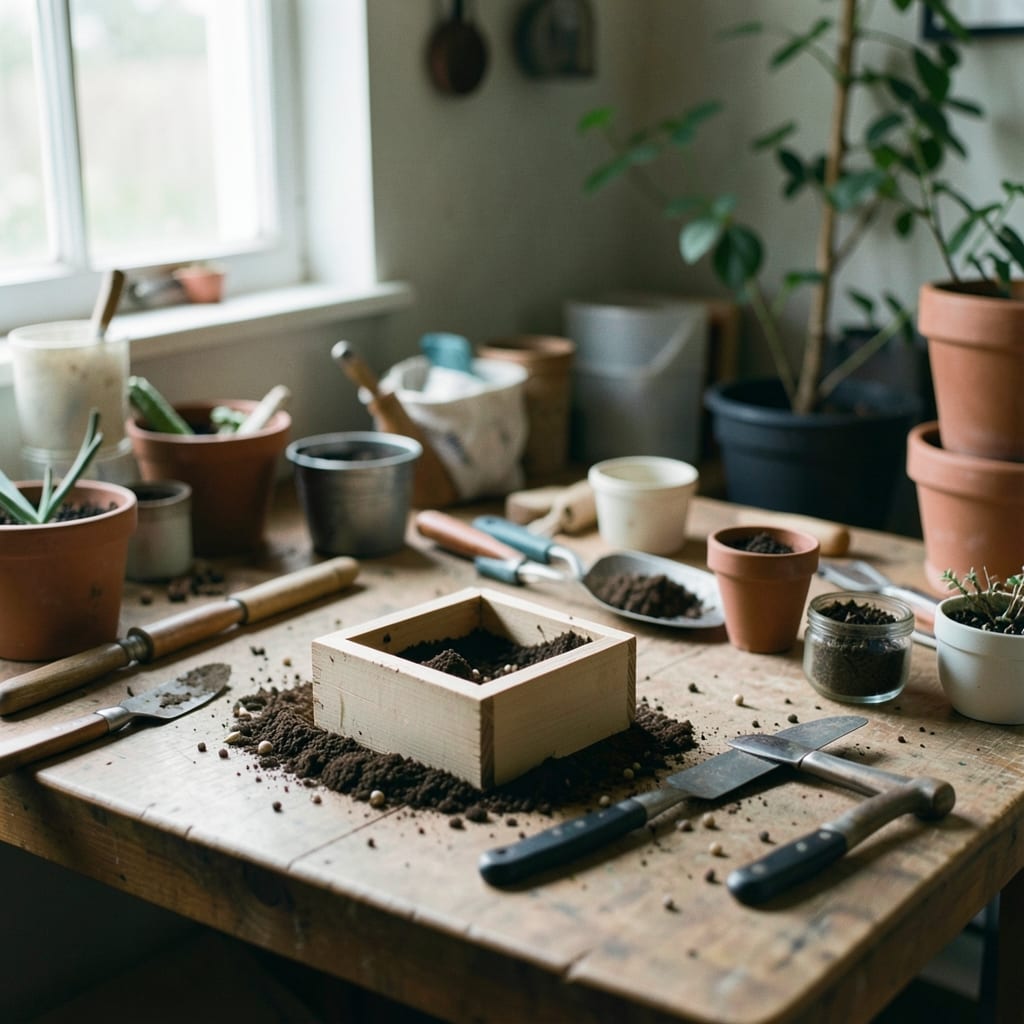
Why I started Plant Greens
I was fourteen when my father handed me a packet of tomato seeds and a cracked terracotta pot, telling me to ‘make it live.’ The soil was too dry, the pot had a hairline crack that let water seep out, and the seedlings I coaxed up kept dying from damping-off before they even reached the light.
My father just shrugged and said, ‘That’s how you learn.’
Years later, I realized there was no one place where I could find the answers I needed—not just the *what* (how deep to plant, how much sun), but the *why* (why the leaves curl, why the roots rot, why the same seed behaves differently in two pots just inches apart).
This site is for the people who’ve been told gardening is ‘intuitive’ and then spent a season watching their plants defy every rule they’d read. Here, you’ll find the questions I wish someone had answered for me—and the answers I’ve learned the hard way.
Meet the founder

My first real teacher was my uncle, a man who grew peppers so hot they’d make your mouth tingle for days.
He’d kneel in the garden at dawn, his hands stained with soil and the ghost of old sunburn, and explain why the basil was wilting not because of the heat, but because the roots had hit a buried rock.
That’s the kind of detail I still hunt for: the unspoken rules that turn a guess into a certainty.
I still have the trowel he gave me—rusted at the handle, the blade bent from digging too deep into stubborn clay. I use it every spring, even though it’s heavier than the ones I’ve bought since.
It’s the only tool that’s seen my failures: the time I planted marigolds in full shade and watched them stretch toward the light like starving children, the year the zucchini vines collapsed under their own weight because I’d over-fertilized. It reminds me that gardening isn’t about perfection.
It’s about paying attention.
The thing that changed everything was the year I tried growing heirloom beans from seed in a north-facing window. They sprouted fine, but the first true leaves were pale and weak, no matter how much I rotated the pot. Turns out, beans need *direct* sun, not just light.
That failure taught me two things: one, you can’t trust what ‘everyone knows’ if it doesn’t match your conditions, and two, the most obvious problems often have the simplest fixes. Now, I test everything twice—once in the conditions I have, and once in the conditions the ‘rules’ say I should.
I have a habit of talking to my plants.
Not in the way people joke about—though I’ve been known to scold a stubborn tomato for splitting its skin—but in the way my grandmother talked to her roses. ‘You’re not getting enough water,’ or ‘That snail’s been here before.’ It sounds silly, but it keeps me from rushing.
Gardening isn’t a race; it’s a conversation, and the best answers come when you’re listening.
Meet the mascot

The mascot started as a scribble on a napkin at a café in Portland, where I’d gone to escape the rain. I was sketching a seedling—just a stem with two leaves—but the first line I drew was too straight, like a child’s drawing of a tree.
I crumpled it up and started over, this time letting the stem wobble a little, the way a real seedling does when it’s fighting to reach the light.
That’s when the character took shape: not a perfect plant, but one that’s clearly struggling, with one leaf slightly larger than the other, like it’s leaning toward the sun.
The proper drawn version came later, on a yellow legal pad in my studio. I added texture to the soil, made the stem look less like a pencil line and more like something alive, and gave the leaves a slight curl at the edges—as if they’re thirsty.
The biggest change was the roots: in the first draft, they were hidden, but I realized they’re just as important as what’s above ground. So I made them visible, tangled and reaching, because that’s how roots grow: messy and determined.
For the final version, I had to simplify everything. The mascot needed to work at the size of a browser tab, so the leaves became three lines each, the stem a single squiggle, and the soil just two uneven strokes.
The roots stayed, but they’re now just three curved lines—enough to show they’re there, but not so many that they distract. I named it *Sprout*, because it’s always in the middle of something: stretching, leaning, or just barely holding on.
What I promise you
This site exists to fill the gaps in the gardening advice you’ve been given—whether it’s a vague ‘water when dry’ or a rule that doesn’t work in your climate.
You can hold me to three things: every post will tell you exactly what worked (and what didn’t), I’ll never assume you have the same tools or space as I do, and if a method fails, I’ll tell you why and what to try next.
What you can hold me to
- Every post includes the *exact* conditions where a plant succeeded—or failed—and what changed to fix it.
- I’ll name the tools I used (and the ones I’ve broken), because the wrong pair of pruners can ruin a harvest before it starts.
- No ‘common sense’ advice unless I’ve tested it myself. If a rule doesn’t work in my garden, it’s not going to work in yours.
- If I don’t know the answer, I’ll tell you where to look—and why the sources I trust matter.
How I create a post
Every post starts with a question: *Why* did that plant do that? Not just ‘what went wrong,’ but the deeper ‘why’—was it the soil, the light, the water, or something I missed entirely?
I dig into the science (or the old gardener’s wisdom) until I find the root of the problem, then test the fix in my own garden. If it works, I write it down. If it doesn’t, I try again—sometimes three or four times—until I understand what’s really happening.
Stage 1: the soil test
The first step is always checking the soil. I dig down two inches with a small trowel and feel for moisture—if it’s dry, I water deeply; if it’s soggy, I hold off and let it drain.
Then I look for signs of life: earthworms mean the soil is healthy, but if it’s full of white grubs, I know I’ve got a pest problem. I never guess. If the soil smells like rot, I know the plant’s roots are drowning.
If it smells like dust, it’s too dry. I time everything: how long it takes for water to soak in, how quickly the top layer dries. A healthy seedling won’t grow in soil that’s just ‘moist enough’—it needs the right balance, and that’s what I measure.
Stage 2: the light adjustment
If the soil is right but the plant still looks wrong, I move it. I place it in the sunniest spot I have, then watch for three days: if the leaves stretch toward the light, it’s not getting enough; if they scorch, it’s too much.
I use a simple trick—holding a ruler next to the plant at noon—and if the shadow is shorter than three inches, I know it’s getting direct sun. No more ‘partial shade’ guesswork.
If the light is the issue, I either move the plant or add a reflective surface (like a white tray) to bounce more light onto it. Every adjustment is timed: how long it takes for the leaves to perk up, how quickly the new growth appears.
How a page gets onto this site
I write everything down while it’s still fresh—notes scribbled on the back of a seed packet, timings jotted in a notebook, and observations about what worked (or didn’t) in the margins.
By the time I sit at my desk, I’ve got a clear picture of what happened, why it mattered, and what I’d do differently next time.
The first draft is always messy: I cut out the fluff, the vague ‘maybe’s, and anything that doesn’t help the reader solve their own problem. Sometimes a post gets rewritten months later because I’ve learned something new—or because a reader pointed out a gap I missed.
Write to me
I love hearing about the plants that defy the rules in your garden—the ones that thrive where they ‘shouldn’t’ or die despite doing everything ‘right.’ Send me photos of your failures (they’re the best teachers), your weirdest successes (like the time your basil grew into a tree), or even just the questions that keep you up at night.
If you’ve got a gardening myth you’re tired of hearing, tell me why it doesn’t work for you. The contact page is where to start.
Gardening is supposed to be full of surprises, but the best ones come when you’re paying attention. Let’s talk about yours.
The guides are grouped by category: Advice, Companion Plants, Flowers, How To, Lawn and Planting.