
Companion Plants
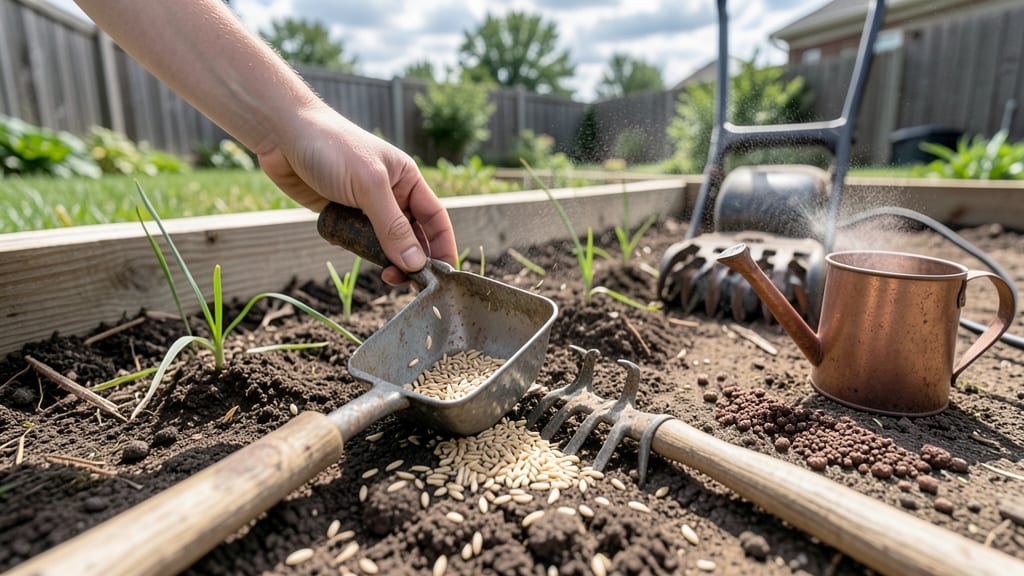
Planting grass seed at the wrong time in spring can turn your dream of a lush lawn into a frustrating gamble—seeds sprouting too slowly, washing away in rain, or never breaking through cold soil.
The key to fast, reliable germination lies in understanding when your local climate actually cooperates, not just when the calendar says "spring."
Most gardeners in USDA Zone 6a (like me!) assume early April is safe, but soil temperatures below 50°F can stall growth for weeks.
Cool-season grasses like Kentucky Bluegrass need that ground to warm up first—waiting until after your last frost (around mid-April in many areas) gives seeds the consistent warmth they crave.
In this guide, I’ll break down the exact soil temperature thresholds for your grass type, regional planting windows, and how to test your soil without fancy tools.
You’ll also learn the 5 biggest mistakes that sabotage spring lawns—and how to avoid them so your grass gets off to a running start.
Ready to transform patchy dirt into vibrant 🌱 green in just 4-6 weeks? Let’s dive into the science (and shortcuts) that make all the difference.
Optimal soil temperature ranges for planting grass seed in spring
Spring is the prime time to plant grass seed, but not all spring days are created equal. The soil temperature is the single most critical factor for fast germination. If it's too cold, seeds may rot; if it's too hot, they'll dry out before sprouting.
For cool-season grasses like Kentucky Bluegrass and Fescue, aim for soil temps between 50°F and 65°F (10°C-18°C). These varieties thrive in cooler conditions and can even handle light frosts once established.
On the other hand, warm-season grasses such as Bermuda, Zoysia, and St. Augustine prefer warmer soil, ideally between 65°F and 75°F (18°C-24°C). Planting them too early in spring risks slow growth or seed dormancy.
The key is matching your grass type to your local climate and soil conditions for the best results.
🌱
| Grass Type | Optimal Soil Temp | Best Planting Window | Germination Time |
|---|---|---|---|
| Cool-Season (Kentucky Bluegrass, Fescue) | 50°F–65°F (10°C–18°C) | 4–6 weeks before last frost | 7–21 days |
| Warm-Season (Bermuda, Zoysia) | 65°F–75°F (18°C–24°C) | After last frost, soil warm | 10–30 days |
| Ryegrass (Fast-Germinating) | 45°F–60°F (7°C–15°C) | Early spring or fall | 5–14 days |
Testing your soil temperature is easier than you think. A soil thermometer (available for under $10) gives precise readings, but you can also use the "hand test".
Press your hand into the soil for 5 seconds—if it feels cool but not freezing, it’s likely in the 50°F–65°F (10°C–18°C) range for cool-season grasses. For warm-season types, the soil should feel warm enough to hold your hand comfortably for 10 seconds.
If your soil is too cold, wait a few weeks or consider overseeding with ryegrass, which germinates faster in cooler temps. If it’s too hot, shade the area temporarily with burlap or straw mulch to protect seeds until conditions improve.
Consistency is key—avoid planting when temperatures fluctuate daily, as this stresses young seedlings.
Another trick is to monitor your local frost dates. Plant cool-season grasses 4–6 weeks before the last expected frost to give seeds time to germinate before summer heat arrives. Warm-season grasses should wait until 2–3 weeks after the last frost, when soil has warmed consistently.
Checking your USDA Plant Hardiness Zone map can help narrow down your ideal window.
Once you’ve nailed the soil temperature, prepare your lawn by removing debris, loosening compacted soil with a rake, and leveling low spots. A thin layer of compost or starter fertilizer adds nutrients for strong root development.
Water lightly after planting to settle seeds into the soil, then keep the surface moist (not soggy) until germination.
💧
Spring planting timeline by u.s. climate Zones: when to act
Your local climate zone determines the exact window for planting grass seed in spring. In USDA Zones 3-6 (Northern regions), cool-season grasses like Kentucky Bluegrass and Tall Fescue thrive when planted 4-6 weeks before your last frost date—typically late March to early May.
Meanwhile, Zones 7-10 (Southern regions) can start as early as February for warm-season grasses like Bermuda or Zoysia, but wait until soil warms to 65°F+.
For Zone 6a (like my yard!), the ideal window is mid-April to early May, aligning with when soil temperatures consistently hit 50°F. But here’s the catch: early springs (like 2024’s record warmth) can trick you into planting too soon—seeds may sprout only to die in a late frost.
Always check your local frost dates and adjust by 2-3 weeks if your spring is unpredictable.
Transitional zones (Zones 6-7) are trickier—they straddle both cool- and warm-season grass needs. Here, I recommend planting cool-season grasses in early spring (March-April) and warm-season grasses in late spring (May-June) when soil is reliably warm.
For example, Tifway Bermuda won’t germinate well until soil hits 70°F, so don’t rush it!
Zones 3-6 (Northern)
Plant cool-season grasses (Kentucky Bluegrass, Fescue) 4-6 weeks before last frost—typically late March to early May. Soil should be 50°F+.
Zones 7-10 (Southern)
Plant warm-season grasses (Bermuda, Zoysia) after soil hits 65°F+, usually March-April. Avoid late frosts—wait until May in Zone 10.
Transitional Zones (6-7)
Split planting: Cool-season in March-April, warm-season in May-June. Use soil thermometer to confirm 50°F+ for cool-season or 70°F+ for warm-season.
Adjust for Early/Late Springs
If your spring is 10°F warmer than average, delay planting by 2-3 weeks to avoid frost damage. Check NOAA frost predictions or local Cooperative Extension for updates.
Pro tip: Use the "back-of-the-hand test" to gauge soil warmth. Press your hand into the ground for 5 seconds—if it feels comfortably warm (like a hot cup of tea), it’s ready for cool-season grass. For warm-season types, aim for hotter than a sauna (use a soil thermometer for accuracy).
Even in the right zone, weather patterns can shift your timeline. If a cold snap is forecasted within 10 days of planting, hold off. Seeds need consistent warmth to germinate—3-4 days below 45°F can stall growth for weeks.
For peace of mind, I always plant 2 weeks before my local National Weather Service predicts stable temps.
Finally, don’t forget that shade patterns change in spring. If your lawn has newly leafed trees casting more shade, opt for shade-tolerant grasses like Fine Fescue or creeping red fescue. These varieties germinate faster in cooler, shadier conditions than sun-loving Kentucky Bluegrass.