
Plants
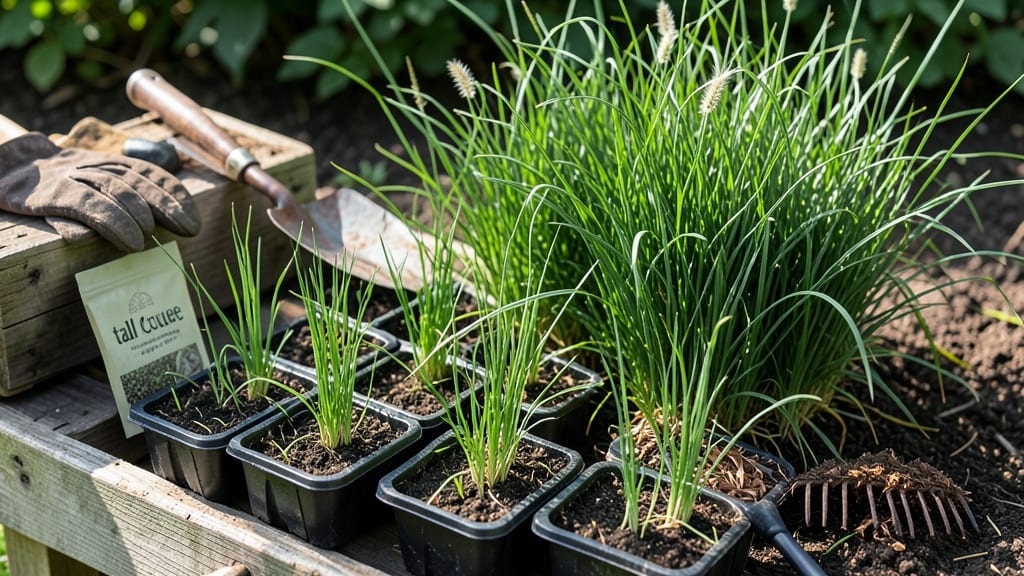
Timing your fescue planting in Missouri can mean the difference between a lush, green lawn and one that struggles to take hold. The perfect window—late summer to early fall—lets this cool-season grass establish strong roots before winter sets in, but get it wrong, and you’ll waste seeds and effort.
Missouri’s 5b-6b climate zone gives you a narrow but critical 6-8 week window (August through early September) to plant fescue. Too early, and summer heat will stress young seedlings; too late, and frost arrives before roots can anchor.
I’ll show you exactly how to read your local cues—soil warmth, rainfall patterns, and frost dates—to lock in the ideal moment for your lawn.
Beyond timing, I’ll walk you through Missouri-specific prep work: testing soil pH (especially important in our clay-heavy regions), choosing the right fescue variety for your yard’s shade or sun, and avoiding the 3 biggest mistakes that kill new grass.
With the right approach, your fescue won’t just survive—it’ll thrive year after year.
Ready to transform your lawn? Let’s dive into the secrets that make fall planting the gold standard for Missouri fescue success.
Optimal Missouri fescue planting months: fall’s perfect window explained
Missouri’s cool-season climate demands precise timing for fescue planting—aim for late summer to early fall when soil stays warm enough for germination but cools before winter. This 4-6 week window (typically September through October) gives seeds time to sprout and develop roots before frost sets in.
The key is soil temperature: fescue seeds need 50-65°F soil temps to germinate. In Missouri’s USDA zones 5b-6b, this usually aligns with mid-September in northern regions and early October in southern areas like Springfield or St. Louis.
Missouri’s first frost dates vary—northern areas (like Kansas City) may see frost by October 15**, while southern regions (like Columbia) can extend planting until early November. Always check your local frost-free date and plant 4-6 weeks beforehand.
For best results, target late September as your ideal window. This gives seeds 6-8 weeks of warm soil and cool air—perfect for root establishment before winter dormancy. Miss this window, and you risk weak germination or winterkill.
🌱
Missouri’s clay-heavy soils can delay germination, so amend with compost 2-3 weeks before planting. Test your soil’s pH (6.0-7.0 ideal) and adjust with lime if needed—acidic soil stunts fescue growth. For northern Missouri, aim for September 15 planting; southern Missouri can extend to October 10.
Use a seed spreader for even coverage—5-10 lbs per 1,000 sqft for new lawns. Lightly rake seeds into ¼-inch soil to ensure contact. Water lightly daily (keep soil moist, not soggy) until germination (7-21 days).
Missouri’s unpredictable weather means flexibility is key. If hot, dry spells persist in September, delay planting until soil temps drop below 70°F. Conversely, if early frost threatens, cover seeds with straw mulch for extra protection.
🌿
After planting, fertilize lightly with a starter fertilizer (10-10-10) to boost root growth. Avoid heavy nitrogen until spring—too much can burn young seedlings. By November, your fescue should be 2-3 inches tall and ready for winter dormancy.
Pro tip: Mark your planting date on a calendar and track soil temps weekly using a soil thermometer ($10 at garden centers). This helps you adjust timing if Missouri’s weather throws curveballs—like unseasonably warm Septembers or early October frosts.
Missouri-specific fescue varieties: which types thrive in fall planting?
Missouri’s diverse climate means not all fescue varieties perform equally—tall fescue and fine fescue are your top choices, but each excels in different conditions.
For sunny lawns (6+ hours of sun), tall fescue (like Kentucky 31) thrives, while fine fescue (such as creeping red) handles shade and drought better.
In Missouri’s USDA zones 5b-6b, tall fescue dominates because it tolerates heat and foot traffic, making it ideal for active lawns. Meanwhile, fine fescue blends well in wooded areas or northern exposures where tall fescue struggles.
Both types need fall planting for best results, but their depth and spacing differ.
🌱
Tall Fescue vs. Fine Fescue for Missouri
- ✅ Heat-tolerant (survives Missouri summers)
- ✅ Durable (handles foot traffic)
- ✅ Fast establishment (germinates in 7-14 days)
- ❌ Less shade-tolerant (needs 4+ hours sun)
- ❌ Higher water needs once established
- ✅ Shade-loving (thrives in wooded areas)
- ✅ Drought-resistant (ideal for Missouri’s dry spells)
- ✅ Soft texture (great for low-maintenance lawns)
- ❌ Slower growth (germinates in 14-21 days)
- ❌ Weaker recovery from damage
*Planting depth: ¼-inch for both; spacing: 5-10 lbs/1,000 sqft (tall) vs. 3-5 lbs/1,000 sqft (fine).
For Missouri’s clay soils, tall fescue often wins due to its deep root system, which penetrates compacted soil better. However, if your yard has patchy sun (like morning shade), mix in 10-20% fine fescue for a denser, greener lawn.
Pro tip: Kentucky 31 tall fescue is the most affordable option, while creeping red fescue offers the best shade tolerance.
When planting, adjust seed depth based on soil moisture: dry soil needs seeds ⅛-inch deep, while moist clay can take ¼-inch depth. Use a seed spreader for even distribution—over-seeding can lead to crowding and disease.
For northern Missouri, lean toward fine fescue blends; southern Missouri favors tall fescue mixes.
After planting, water lightly daily (keep soil consistently moist) until germination. Once sprouted, reduce watering to 2-3 times weekly to encourage deep root growth. By November, your fescue should be 2-3 inches tall, ready to overwinter without browning.
🌿
For best results, test your soil’s pH (6.0-7.0 ideal) before planting—Missouri’s acidic clay often needs lime amendment. If your lawn has bare spots, consider a tall fescue/fine fescue blend (like 50/50 mix) for balanced coverage.
Avoid cheap seed mixes with annual ryegrass, which dies in winter and leaves gaps.