
Plants
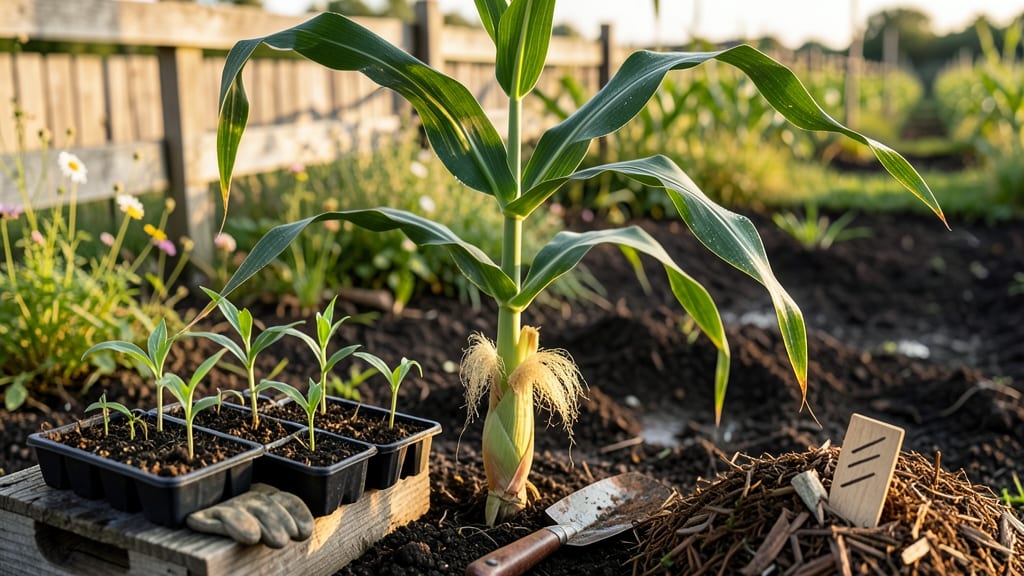
Timing your 🌽 corn planting in West Virginia isn’t just about the calendar—it’s about catching that sweet spot between soil warmth and frost risk. Plant too early, and your seeds will rot in cold ground; too late, and you might miss the harvest window entirely.
The key? Waiting until the soil hits 60°F and the last frost has passed, usually around mid-April to early May.
Why does this matter so much? Corn thrives when the ground is warm, and West Virginia’s Zone 5b-7a climate means frost can linger well into April. Skipping the soil temperature check is a common mistake—even if the air feels spring-like, the roots need that warmth to germinate.
I’ll show you exactly how to test soil temps and adjust planting for your specific microclimate.
Beyond the basics, you’ll discover succession planting tricks to stretch your harvest from late July to October. Whether you’re growing sweet corn for the table or field corn for livestock, these regional tips will help you beat West Virginia’s short growing season.
Let’s dive into the exact dates and methods that work best here.
From companion planting with beans to choosing the right varieties for your elevation, I’ve got the insider strategies that local farmers swear by. Ready to turn your garden into a corn patch that rivals the best in the state? Let’s get started.
Optimal planting dates for corn in West Virginia based on soil temperature
West Virginia’s Zone 6B climate demands precision when planting corn—soil temperature is the #1 factor for success. Corn seeds won’t germinate reliably until the soil reaches a consistent 60°F, which typically happens between mid-April and early May in most of the state.
Planting too early risks frost damage, while waiting too long may shorten your harvest window.
I’ve planted corn in WV for years, and I’ve learned that soil thermometers are worth their weight in gold. Without one, watch for daytime highs of 70°F+ and nighttime lows above 50°F—this usually aligns with safe planting conditions.
The average last frost date in WV is April 15, but mountain regions can run 2-3 weeks later.
Here’s the golden planting window for West Virginia corn growers:
| Planting Stage | Ideal Timeframe | Soil Temp Requirement | West Virginia Notes |
|---|---|---|---|
| Direct Sowing | Mid-April to early May | 60°F+ consistently | Wait for soil to warm after last frost |
| Succession Planting | Every 2 weeks until June 15 | 60°F+ | Extend harvest season with staggered plantings |
| Late Planting (Risky) | Early June (max) | 65°F+ | Choose early-maturing varieties only |
| Frost Sensitivity | N/A | Germinating seeds die at 32°F | Use row covers if planting near frost dates |
For sweet corn varieties, aim to plant your first batch by April 20 to ensure harvests in late July before heat stress sets in. Field corn and popcorn can handle slightly later plantings but still need to reach maturity before first frost (mid-October).
I’ve found that ‘Silver Queen’ and ‘Peaches and Cream’ varieties thrive in WV’s climate when planted in this window.
Pro tip: If you’re in higher elevations (above 3,000 ft), like in the Monongahela National Forest region, push planting back to late April or early May.
Cooler nights and slower soil warming are common there. Always check WVU Extension’s frost maps for your specific county—it’s a game-changer for accuracy.
One mistake I see often is planting corn too close to the last frost. Even if soil is warm, a late April frost can wipe out young seedlings.
To hedge your bets, keep a garden thermometer buried 2 inches deep where you’ll plant—this gives you real-time data instead of guessing. Most hardware stores sell them for under $20, and they’re worth every penny.
Remember that corn is a heavy feeder, so soil should be rich in organic matter before planting. Work in compost or aged manure 2-3 weeks before your target planting date.
This gives microbes time to break it down and warm the soil faster. I like to add a balanced fertilizer (10-10-10) at planting time for that extra boost.
If you’re new to growing corn in WV, start with one variety and focus on perfecting your timing. Succession planting is key for a continuous harvest—plant a new batch every 2 weeks until June 15.
This way, you’ll have fresh ears from late July through September, avoiding the dog days of August when corn can struggle with heat.
Lastly, don’t forget that corn needs space. Plant seeds 1 inch deep and 4-6 inches apart in blocks (not rows) to improve pollination. This is especially important in WV’s humid climate, where wind can affect pollen transfer. A well-planted block ensures better ear development.
How to adjust corn planting for West Virginia’s frost & heat patterns
West Virginia’s Zone 6B climate throws curveballs with unpredictable frost dates and sudden heatwaves—both of which can sabotage your corn crop if you’re not prepared.
While the average last frost date hovers around April 15, mountain valleys can experience frost as late as May 1, while lower elevations might be frost-free by April 1. The key is flexibility: monitor your local microclimate and adjust planting accordingly.
Heat is another challenge. Corn thrives in 75-85°F temperatures, but West Virginia summers can push past 90°F, stressing plants. Varieties like Golden Bantam or Silver Queen handle heat better than longer-season types.
I’ve found that planting in blocks (not rows) improves pollination when temperatures spike, reducing the risk of poor ear development.
Here’s the critical adjustment: if your area has a history of late frosts, consider succession planting in early June for a fall harvest.
This works because West Virginia’s first frost typically arrives around October 15, leaving a 180-day growing window—just enough for early-maturing varieties to reach maturity before cold sets in.
🌱
- 1 Test soil temperature with a soil thermometer—plant only when it hits 60°F+ for 5+ days. Cold soil delays germination by weeks.
- 2 Use row covers for early spring plantings to protect seedlings from unexpected frosts. Remove covers once plants reach 6 inches tall.
- 3 Plant in blocks (not rows) to improve cross-pollination during heatwaves. Space blocks 2-3 feet apart for better ear development.
- 4 Succession plant in early June for a fall harvest. Choose 60-70 day varieties like Ambrosia or Peaches and Cream to beat frost.
- 5 Mulch heavily with straw or grass clippings to retain moisture during summer droughts. Corn needs 1-2 inches of water weekly—never let soil dry out.
Don’t overlook companion planting as a heat buffer. I’ve had success pairing corn with beans (which fix nitrogen) and squash (to deter pests). The beans also provide shade for young corn plants during scorching afternoons.
For mountain gardens, plant corn near stone walls or fences to create microclimates that stay cooler.
If you’re in a high-elevation area (like the Allegheny Mountains), push planting back to late May—frost risk lingers longer there. Use a planting calendar from the WVU Extension Service for your specific county, as local data beats general rules every time.
Finally, keep an eye on the 7-day forecast before planting. A cold snap warning means delaying by 2-3 weeks. Corn won’t wait for you—once it’s in the ground, it grows fast, but it won’t tolerate cold soil or frost.
Adjusting for West Virginia’s quirks is what separates a mediocre harvest from a bountiful one.
☀️