
Plants
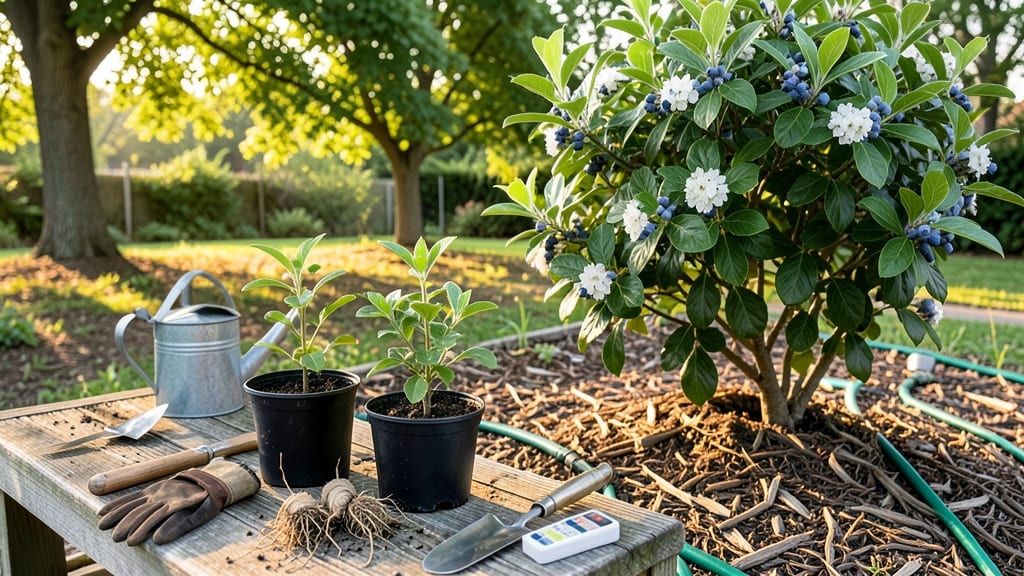
Timing your 🫐 blueberry planting in Zone 8b can make the difference between a thriving bush and one that struggles to take root.
Unlike cooler climates where fall planting works, Zone 8b's mild winters and hot summers demand a precise window—late winter to early spring—to give your blueberries the best shot at strong roots before summer heat sets in.
Most gardeners in Zone 8b assume planting in March is safe, but soil temperatures below 50°F can slow growth, while waiting too long risks summer stress.
I’ve planted blueberries in this zone for years, and the key is understanding your local frost dates—typically around mid-February—and adjusting for microclimates that might push your window earlier or later.
Whether you’re planting in-ground or containers, the goal is the same: get those roots established before the real heat arrives.
I’ll walk you through the exact steps to time your planting, from checking soil temps to choosing the right blueberry varieties for Zone 8b, so you can avoid common mistakes and set up your bush for a bountiful harvest by next summer.
Ready to skip the guesswork? Let’s dive into the foolproof schedule that’s worked for me—and hundreds of other Zone 8b growers—to ensure your blueberries thrive from day one.
Optimal planting window for blueberries in Zone 8b: soil temperature & frost dates
In Zone 8b, blueberries thrive when planted during the 4-6 week window between late winter and early spring, specifically from mid-February to mid-April. This timing aligns with soil warming to 50-60°F—the ideal range for root establishment before the spring growing season kicks in.
The last average frost date in Zone 8b typically falls around February 15, but microclimates (like urban heat islands or valleys) can push this date 2-3 weeks earlier or later.
Why this window? Blueberries are dormant in winter but begin root growth as soil temperatures rise. Planting too early risks frost damage to tender roots, while waiting too long delays established root systems needed for summer fruiting.
The key is to plant before bud break—when buds swell but haven’t yet opened.
| Planting Stage | Zone 8b Timeline | Soil Conditions | Action Steps |
|---|---|---|---|
| Late Winter Prep | Mid-February | 40-45°F (chilled soil) | Test soil pH (aim for 4.5-5.5); amend with sulfur if needed. |
| Optimal Planting | Mid-February to Mid-April | 50-60°F (warming soil) | Plant bare-root or container-grown bushes; water deeply after planting. |
| Bud Break | Late March to Early April | 55-65°F (active growth) | Monitor for new growth; mulch with pine needles to retain acidity. |
| Post-Planting Care | April to May | 60-70°F (established roots) | Apply balanced fertilizer (10-10-10); water deeply 2-3x/week. |
To pinpoint your exact planting window, check your local last frost date using resources like the National Oceanic and Atmospheric Administration (NOAA) or your local cooperative extension service.
For example, in Atlanta, GA (Zone 8a/b border), the last frost is often March 15, while San Antonio, TX (Zone 8b) averages February 28. Planting 2-3 weeks before your last frost ensures roots establish before warm weather arrives.
For container-grown blueberries, the window extends slightly later—up to mid-April—since pots warm faster. However, avoid planting after April 15, as summer heat can stress newly transplanted bushes.
If you miss this window, fall planting (October) is a secondary option, but it requires extra care to protect roots from early winter chills.
Pro tip: Use a soil thermometer to verify temperatures. Blueberry roots need consistent warmth—if soil stays below 50°F for more than 3 days, roots may stall.
In Zone 8b’s warmer microclimates (like near large bodies of water), you might plant as early as late January, but always monitor weather forecasts for unexpected cold snaps.
Once planted, maintain moist, acidic soil (pH 4.5-5.5) and mulch heavily with pine straw or wood chips to simulate their natural forest-floor habitat. This mimics the humid, shaded conditions of their native southeastern U.S. ranges, helping them thrive in Zone 8b’s hot summers and mild winters.
Remember: Timing is everything for blueberries. Plant too early, and frost will damage tender roots; too late, and your bush won’t establish before summer heat sets in.
Aim for that sweet spot—when soil is warm, frost is a fading memory, and your blueberries are ready to burst into growth.
Optimal planting window for blueberries in Zone 8b: soil temperature & frost dates
In Zone 8b, blueberries thrive when planted during a 4-6 week window that balances soil temperature and frost risk. The ideal time is late winter to early spring, typically between mid-February and mid-April.
This window ensures roots establish before summer heat peaks, while avoiding late frosts that can damage tender new growth.
Blueberries need soil temperatures of 50-60°F to root successfully. Using a soil thermometer is key—plant when temps consistently stay above 55°F at 4 inches deep. In Zone 8b, this usually aligns with March, but microclimates (like urban heat islands) may shift timing by 1-2 weeks earlier or later.
| Factor | Zone 8b Specification | Actionable Tip |
|---|---|---|
| Soil Temp | 50-60°F (4" deep) | Use a soil thermometer; plant when temps stabilize above 55°F. |
| Last Frost | Mid-February (varies) | Check local frost data; aim for 2 weeks after last frost. |
| Ideal Planting Window | March 1–April 15 | Bare-root plants: March; container-grown: April. |
| Soil pH | 4.5–5.5 (acidic) | Test soil before planting; amend with sulfur or peat moss. |
Zone 8b’s mild winters mean late frosts are rare, but they can still occur in February. To play it safe, I recommend planting bare-root blueberries by March 1 and container-grown plants by April 15.
This gives roots 4-6 weeks to establish before summer’s heat stress begins. If you’re in a cooler microclimate (e.g., higher elevation), delay until mid-March to avoid frost risk.
For container planting, the window extends slightly later—April is ideal—since pots warm up faster and you can move them to protect from unexpected cold snaps. Just ensure containers have drainage holes and use a lightweight, acidic potting mix.
I’ve had success with 5-gallon pots for dwarf varieties like 'Top Hat', which thrive even in small spaces.
Don’t wait until May—this is a common mistake in Zone 8b. Planting too late means roots struggle to establish before summer’s 90°F+ temperatures, leading to heat stress and poor yields.
If you miss the spring window, fall planting (October) is a backup option, but it’s riskier due to shorter rooting time before winter.
Pro tip: Use a frost calendar from your local Cooperative Extension Service (e.g., UC Davis for California’s Zone 8b). For example, in Sacramento, the last frost is February 15, while in San Diego, it’s January 15.
Adjust your timing accordingly—this small step can mean the difference between a thriving bush and a struggling one.
Finally, amend your soil 4-6 weeks before planting with peat moss or pine fines to lower pH. Blueberries are acid-loving, and Zone 8b’s native soil is often too alkaline.
A quick soil test (available at garden centers for ~$10) will tell you exactly how much sulfur or organic matter to add.