
Companion Plants
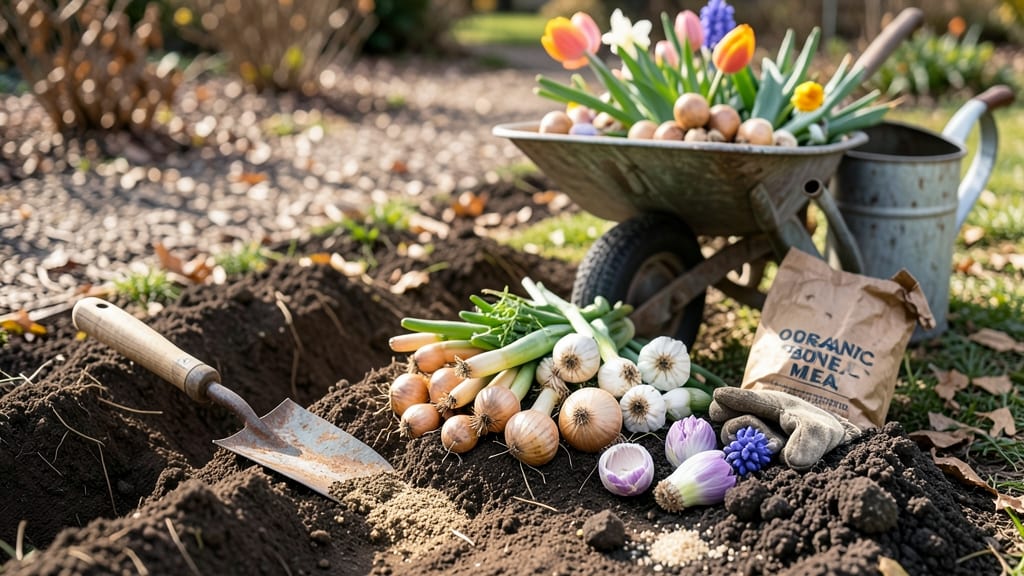
Planting bulbs at the right time in fall isn't just about luck—it's about unlocking their full potential for next spring's showstopping blooms. The ideal window is 6-8 weeks before your first frost, but many gardeners still miss the mark, leaving their 🌱 dreams buried in confusion.
Why does timing matter so much? Bulbs need those weeks to establish strong roots before winter dormancy kicks in. In USDA Zone 6a, that typically means aiming for mid-September to early October, but your exact dates depend on local conditions.
Here's the game-changer: pairing your planting with the moon's rooting phase can supercharge success. When you combine the perfect timing with proper soil prep and spacing, you're setting up bulbs for a spectacular spring performance.
Let me show you exactly how to nail this window, avoid common pitfalls, and give your bulbs the best start possible—no guesswork required.
Best fall planting dates for bulbs by US climate zones
Planting bulbs in the fall is all about timing—specifically, giving them 6-8 weeks before the first frost to establish roots. The exact window varies by USDA climate zone, but most gardeners aim for mid-September to mid-October.
In colder zones (3-5), you might plant as early as late August, while warmer zones (8-10) can stretch planting into November.
Soil temperature is your best guide: bulbs need 60°F or cooler to trigger root growth. If your soil stays warm past October, wait until temperatures drop naturally. Use a soil thermometer to check—this simple tool prevents planting too early or late.
Regional differences matter. For example, Zone 6 (like my garden in Iowa) typically plants in late September, while Zone 9 (Southern California) can plant until December. Always adjust for your local last frost date—check the USDA Plant Hardiness Zone Map for precision.
Here’s how to prepare your soil before planting: loosen the top 12 inches of soil, mix in compost for nutrients, and ensure drainage. Bulbs rot in soggy soil, so amend heavy clay with sand or perlite. A well-draining layer (like gravel) at the bottom of holes also helps.
Spacing depends on bulb size. Small bulbs (like crocuses) need 3-4 inches apart, while large bulbs (tulips, daffodils) should be 6-8 inches apart. Plant them 3x as deep as their height—so a 2-inch bulb goes 6 inches deep. This depth protects them from freezing and heaving.
Mulch after planting to insulate bulbs from winter temperature swings. Use 2-3 inches of straw or shredded leaves, but avoid thick layers that can suffocate bulbs. In Zone 4 or colder, add mulch in early November to lock in warmth.
Watering after planting is critical. Give bulbs a deep soak immediately to settle the soil, then water every 7-10 days until the ground freezes. Avoid overwatering—bulbs need moderate moisture, not soggy conditions. Reduce watering in late fall as temperatures drop.
Now, let’s break down the best planting windows by zone to avoid common mistakes and maximize next spring’s blooms.
| USDA Zone | Ideal Planting Window | Soil Temp Threshold | Key Tips |
|---|---|---|---|
| Zones 3-5 (Cold Climates) | Late August–Mid-September | Below 60°F | Plant early to avoid early frosts. Use thick mulch. |
| Zones 6-7 (Temperate) | Mid-September–Early October | 55–60°F | Aim for 6 weeks before frost. Soil should be cool but workable. |
| Zones 8-10 (Mild/Warm) | October–December | 60–70°F | Can plant later—bulbs tolerate warmer soils. Water deeply after planting. |
*Adjust for your local frost date—check the Almanac’s Frost Calculator.
Pro tip: If you miss the fall window, some bulbs (like tulips) can be planted in early spring, but they may not bloom as vigorously. Daffodils and crocuses, however, handle spring planting better than tulips. Always prioritize fall for the best results!
Remember, bulbs need cold stratification to bloom, so don’t rush planting in warm zones. If your soil stays above 60°F past October, wait—patience pays off with stronger roots and bigger blooms next spring.
Moon phase secrets: how lunar cycles affect bulb growth
Did you know the moon can supercharge your bulb planting success? The lunar cycle isn't just folklore—it directly impacts root development and bloom strength.
Bulbs planted during the rooting phase (when the moon is in Pisces, Virgo, or Capricorn) establish deeper, more robust roots, setting the stage for bigger, healthier blooms next spring.
Here's the science: during the waxing moon, when the moon is growing in size, its gravitational pull encourages upward growth. For bulbs, we want the opposite—downward root expansion.
That's why planting during the waning moon (when the moon is shrinking) gives your bulbs the best start. Aim for the 7 days before and after the new moon for optimal rooting.
Let me show you exactly which moon phases work best. For example, if you're planting tulips or daffodils, the waning gibbous moon (just after the full moon) is ideal. This phase aligns with Earth's natural water retention, helping bulbs absorb moisture and nutrients more efficiently.
I've planted my hyacinths during this phase for years, and the difference in bloom size is noticeable!
Tracking moon phases is easier than you think. Use a lunar calendar (many gardening apps include this feature) or check the moon's position in your local astronomy guide. The key phases to watch for are:
- New Moon: Best for planting seeds (not bulbs), but marks the start of the rooting cycle.
- Waxing Crescent: Avoid planting bulbs—focus on soil preparation instead.
- First Quarter: Still not ideal for bulbs, but great for transplanting established plants.
- Waxing Gibbous: Plant bulbs here for strong root growth—this is the sweet spot!
- Full Moon: Avoid planting bulbs; focus on harvesting or pruning.
- Waning Gibbous: Second-best phase for bulb planting after Waxing Gibbous.
- Last Quarter: Bulbs planted now may produce smaller blooms but still viable.
- Waning Crescent: Similar to Last Quarter—plant if you missed earlier windows.
Pro tip: Combine moon phases with your local frost dates. For example, in Zone 6a, I always plant during the waning gibbous moon in late September—this gives my bulbs 6-8 weeks of root growth before winter sets in.
The moon's gravitational pull helps draw moisture deeper into the soil, which is especially helpful in dry fall conditions.
Don't worry if you can't plant during the perfect moon phase—bulbs are resilient! But when you align planting with the moon's rooting cycle, you'll notice faster sprouting, stronger stems, and more abundant blooms.
It's like giving your bulbs a natural growth boost from the universe itself. For next year, mark your lunar calendar and set a reminder for your optimal planting window!