
Plants
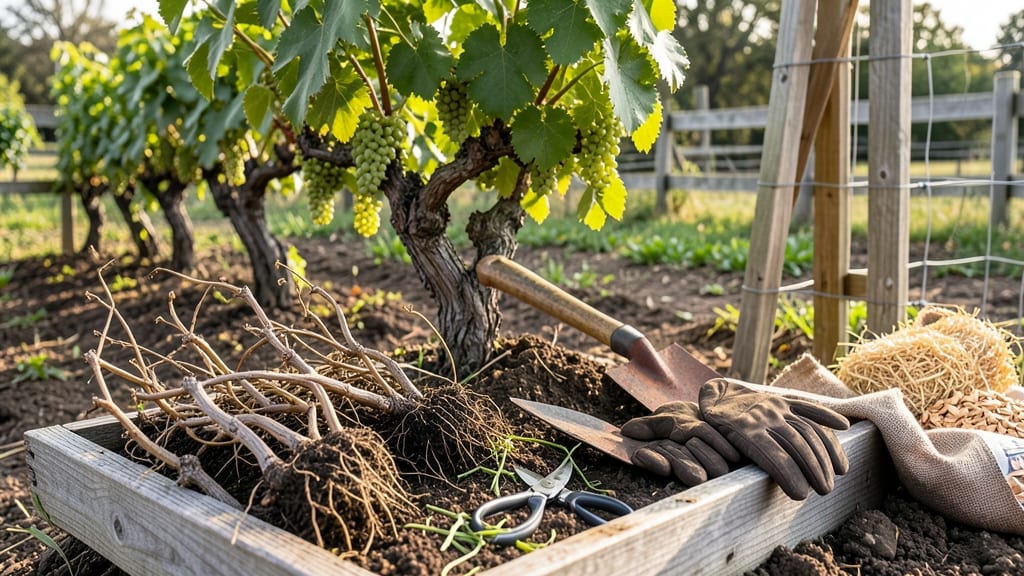
If you've ever dreamed of growing your own 🍇 grapes in Missouri, timing your planting could mean the difference between a thriving vineyard and a sad, frost-bitten failure.
Missouri's 5b-6b climate brings unique challenges with its unpredictable springs and humid summers, but getting the timing right gives your vines their best shot at success.
The ideal planting window in Missouri actually comes twice a year - either in late March through early May after the last frost, or again in August through early September for a fall start.
This isn't just random advice; it's about matching your grape varieties to Missouri's chill-hour zones (those 300-1,200 hours of winter cold that grapes need to produce fruit).
I'll show you exactly how to choose between spring and fall planting, which grape varieties thrive best in your specific Missouri location, and how to prepare your soil and trellis system for maximum success.
Whether you're growing Norton for wine or sweet table grapes, getting these details right makes all the difference.
Let's dive into the specific steps that will help your grapevines establish strong roots and produce abundant harvests from August through October - no matter which planting window you choose for your Missouri garden.
Missouri’s chill-hour zones: how they determine best planting months for grapes
Missouri’s chill-hour zones (300–1,200 hours) are the secret to picking the right grape varieties for your region. These zones measure winter cold exposure, which grapevines need to break dormancy and produce fruit. Northern Missouri (zones 5b–6a) gets 1,000–1,200 chill hours, while southern Missouri (zones 6b–7a) sees 800–1,000 hours.
Planting the wrong variety? You’ll end up with poor fruit set or no harvest at all.
For example, Norton grapes (Missouri’s state grape) thrive in 800–1,000 chill hours, making them perfect for southern Missouri. Meanwhile, Cabernet Franc needs 1,000–1,200 chill hours, ideal for northern Missouri’s colder winters. Matching your variety to your zone ensures healthy vines and abundant harvests.
🍇
| Chill-Hour Zone | Missouri Regions | Best Grape Varieties | Planting Window |
|---|---|---|---|
| 1,000–1,200 | Northern MO (St. Louis, Kansas City) | Cabernet Franc, Chardonnay, Riesling | Late March–Early May |
| 800–1,000 | Southern MO (Springfield, Joplin) | Norton, Catawba, Concord | August–Early September |
| 600–800 | Southeast MO (Poplar Bluff) | Muscadine, Scuppernong | Late March–April |
Planting in spring (March–May) works best for northern Missouri, where soil warms slower and frost risks linger. Southern Missouri, however, benefits from fall planting (August–September) because cooler temps help roots establish before winter. Norton grapes, for example, planted in late August, will have stronger root systems by spring.
Missouri’s humidity and clay-heavy soils can stress young vines, so chill-hour matching isn’t just about cold tolerance—it’s also about disease resistance. Varieties like Riesling (high chill needs) handle powdery mildew better than Concord in hot, humid summers. Always check local extension service recommendations for your exact county.
If you’re unsure about your chill hours, use a chill-hour calculator or consult the Missouri Botanical Garden’s grape zone map. Pro tip: Plant 2–3 varieties with different chill needs to spread your harvest window from late August to October.
🌡️
Once you’ve matched your grape variety to your chill-hour zone, the next step is choosing the right planting season. Spring planting gives vines a full growing season to establish roots, while fall planting reduces stress in hot Missouri summers.
Both methods work—just adjust your watering schedule and mulch depth accordingly.
For northern Missouri growers, early May is ideal because soil temperatures reach 60°F+, encouraging root growth. In southern Missouri, late August planting lets vines harden off before winter. Either way, avoid planting in extreme heat or cold—50–70°F soil temps are perfect.
🌱
Best grapes to plant in Missouri by season: spring vs. fall planting guide
Choosing between spring and fall planting for grapes in Missouri depends on your location, grape variety, and climate goals. Northern Missouri (like St. Louis) thrives with spring planting (March–May), while southern Missouri (like Springfield) often prefers fall planting (August–September).
The right choice affects root development, frost resistance, and even harvest timing.
Spring planting gives vines a full growing season to establish roots before winter, but late frosts (common until mid-April) can damage young shoots. Fall planting, on the other hand, lets vines harden off in cooler temps, reducing stress from Missouri’s humid summers.
For example, Norton grapes planted in late August in southern Missouri often outperform spring-planted vines due to better root establishment.
🌱
Spring Planting (March–May)
- Full growing season for root establishment
- Best for northern Missouri (Cabernet Franc, Riesling)
- Easier to monitor frost risks (avoid late April)
- Risk of late frosts damaging new shoots
- Stress from hot, dry summers if planted too early
- Requires consistent watering during establishment
Fall Planting (August–September)
- Cooler temps reduce stress on young vines
- Ideal for southern Missouri (Norton, Catawba)
- Roots establish before winter dormancy
- Limited growing season before winter
- Requires proper mulching for insulation
- Less time for above-ground growth before cold
For spring planting, aim for late March to early May after the last frost date (usually mid-April in northern Missouri). Soil temperatures should reach 60°F+—use a soil thermometer to check. Fall planting works best from late August to early September, giving vines 6–8 weeks to establish roots before winter.
In both cases, amend clay-heavy Missouri soils with compost to improve drainage.
Missouri’s humidity makes fall planting a favorite for many growers because it avoids the heat stress of summer.
However, if you choose spring, mulch heavily (3–4 inches) to retain moisture and protect roots. Variety matters too: Norton grapes (fall-planted) handle Missouri’s heat better than Cabernet Franc (spring-planted), which needs cooler summers to ripen properly.
🌡️
Pro tip: If you’re unsure, plant a test vine in both seasons to compare growth. For container growing, spring planting gives more flexibility, while in-ground vines often benefit from fall’s cooler temps. Either way, prune lightly at planting (remove only damaged canes) to reduce stress on new vines.
With the right timing, your Missouri grape harvest could stretch from late August to October, depending on your varieties.
🍇