
Plants
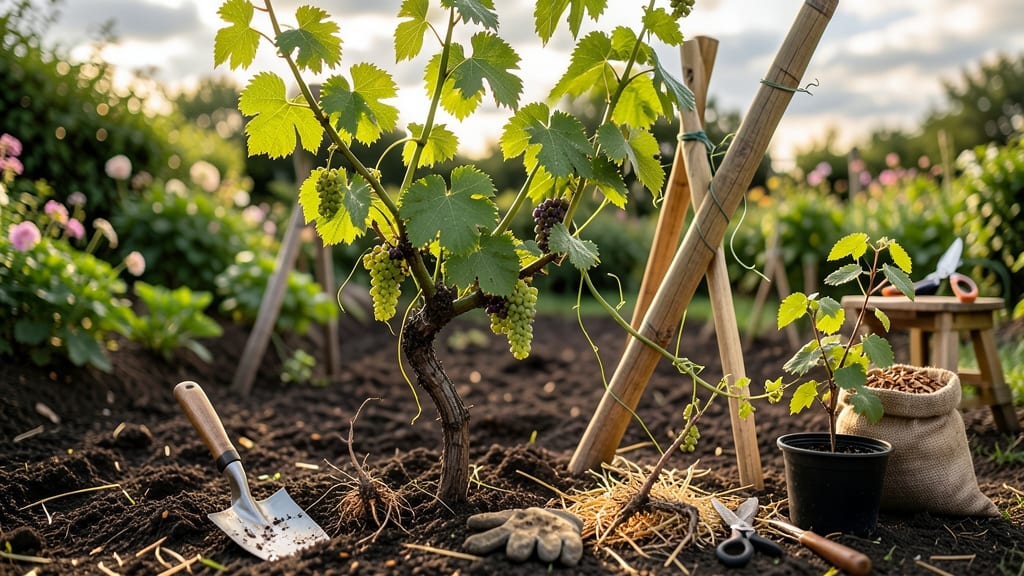
Timing your 🍇 grape planting in Colorado isn’t just about picking a month—it’s about mastering the balance between elevation, frost risks, and your chosen variety.
Whether you’re growing cold-hardy Concord grapes in Denver or heat-loving Thompson Seedless in Pueblo, planting too early or late can mean the difference between a bountiful harvest and a wasted investment.
Spring is the prime window, but Colorado’s USDA Zones 5-7 create unique challenges. Most gardeners plant between April and May after the last frost, but high-altitude areas like the Front Range may need to wait until early June.
Fall planting in September or October also works, giving vines time to establish roots before winter—just avoid planting when temperatures dip below 50°F.
Here’s the key: your elevation dictates everything. Lower elevations (like the Arkansas Valley) can plant earlier, while mountainous regions near Zone 5 must wait for warmer soil.
We’ll break down the exact windows for your microclimate, plus the best varieties for each zone to ensure your vines thrive from the first budbreak.
Ready to grow grapes that outperform expectations? Let’s dive into the perfect planting schedule for your Colorado garden, so you can enjoy homegrown fruit from August through September—or even turn your harvest into wine or jelly. Your future vineyard starts with the right timing.
Optimal planting months for Colorado grapes by elevation Zone
Colorado’s elevation-driven climate means your grape planting window can shift by weeks—or even months—depending on where you live. Lowland valleys like Grand Junction (Zone 6-7) enjoy longer growing seasons, while Denver’s foothills (Zone 5-6) face earlier frosts.
High-altitude areas like Fort Collins (Zone 4-5) require cold-hardy varieties and later planting to avoid spring frost damage.
For most of Colorado, the ideal planting window is April to early May (after last frost) or September to October (fall planting). However, these dates vary by 1,000+ feet in elevation.
For example, Pueblo (Zone 6) can plant as early as March 15, while Aspen (Zone 5) should wait until May 1 to avoid late frosts.
Here’s how to align your planting with Colorado’s microclimates and frost risks:
| Elevation Zone | USDA Zone | Last Frost Date | Best Planting Window | Notes |
|---|---|---|---|---|
| Lowland Valleys (3,000–4,500 ft) | 6–7 | March 15–April 1 | March 30–April 30 | Warmest microclimate; ideal for Vitis vinifera (Cabernet, Chardonnay). |
| Front Range Foothills (4,500–6,000 ft) | 5–6 | April 15–May 1 | April 15–May 15 | Moderate frost risk; Concord, Niagara thrive here. |
| High Plains (6,000–7,000 ft) | 4–5 | May 1–May 15 | May 1–June 1 | Short season; hybrids (Frontenac, Marquette) recommended. |
| Mountain Valleys (7,000+ ft) | 3–4 | June 1–June 15 | June 1–July 1 | Limited to cold-hardy table grapes; container growing ideal. |
If you’re planting in containers or high-altitude areas, extend your window by 4–6 weeks. Containers warm up faster in spring, allowing earlier planting, while black plastic mulch can push back frost dates by 2–3 weeks in cooler zones.
For fall planting (September–October), aim to plant 6–8 weeks before first frost. This gives roots time to establish before winter dormancy. In Zone 5–6, this means planting by October 1; in Zone 4, wrap by September 15.
Soil temperature is critical: Grapes need 50°F+ soil to root successfully. Use a soil thermometer to confirm readiness—especially in higher elevations where cold soils delay growth. If soil is too cold, wait 1–2 weeks or use row covers.
Pro tip: Check your local CoCoRaHS weather station or Colorado State University Extension for hyper-local frost data. Microclimates near urban heat islands (e.g., Denver) can be 5–10°F warmer than rural areas just miles away.
🌱
Optimal planting months for Colorado grapes by elevation Zone
Colorado’s elevation zones dramatically impact grape planting success. Lowland valleys like Grand Junction (Zone 5) and Pueblo (Zone 6) offer earlier planting windows, while Denver’s foothills (Zone 7) and mountain regions (Zone 4) require later starts to avoid frost.
Understanding your last frost date is critical—most Colorado regions experience it between April 15 and May 15, depending on elevation.
For spring planting, aim to plant 2-4 weeks after your local last frost date. This timing allows soil to warm to 50°F (10°C)—ideal for root establishment. Fall planting (September-October) is also viable, giving vines time to root before winter dormancy.
However, high-elevation areas (above 6,000 feet) should delay fall planting until late September to avoid early frosts.
🍇 Colorado Grape Planting Guide by Elevation
| Elevation Zone | USDA Zone | Last Frost Date | Best Planting Window | Key Varieties |
|---|---|---|---|---|
| Lowland Valleys (3,000–4,000 ft) | 5–6 | April 15–May 1 | April 30–May 15 (spring) or Sept 1–15 (fall) | Cabernet Franc, Chardonnay, Thompson Seedless |
| Front Range (4,000–6,000 ft) | 6–7 | May 1–15 | May 15–June 1 (spring) or Sept 15–30 (fall) | Concord, Merlot, Riesling |
| High Foothills (6,000–8,000 ft) | 4–5 | May 15–31 | June 1–15 (spring) or Sept 30–Oct 15 (fall) | Frontenac, Marquette, Niagara |
Microclimates add another layer of complexity. Urban Denver (Zone 6) may experience 10°F warmer microclimates in south-facing yards, allowing earlier planting than rural areas. Meanwhile, western slope regions like Grand Junction benefit from 200+ frost-free days, extending both planting and harvest seasons.
Always check your local CoCoRaHS station for precise frost data—these networks provide hyper-local insights Colorado’s weather services often miss.
Container planting offers flexibility for high-elevation gardeners. Potted grapes can be moved to protected areas during late spring frosts or overwintered indoors. However, ensure containers are at least 18 inches deep and use well-draining soil mixes to prevent root rot.
This method works best for compact varieties like Thompson Seedless or Concord, which tolerate container life better than sprawling wine grapes.
Soil temperature is just as critical as air temperature. Use a soil thermometer to confirm 50°F (10°C) minimum before planting. In high-altitude zones, this may not occur until late May or early June.
Amend cold soils with compost or leaf mold to accelerate warming. For fall planting, aim to finish by 6 weeks before first frost—this gives roots time to establish before winter dormancy begins.
Pro tip: Mulch heavily (4–6 inches) after planting to regulate soil temperature and retain moisture. Use straw or wood chips—avoid grass clippings, which can compact and suffocate roots. This simple step can mean the difference between survival and thriving during Colorado’s unpredictable spring frost events or summer heatwaves.