
Plants
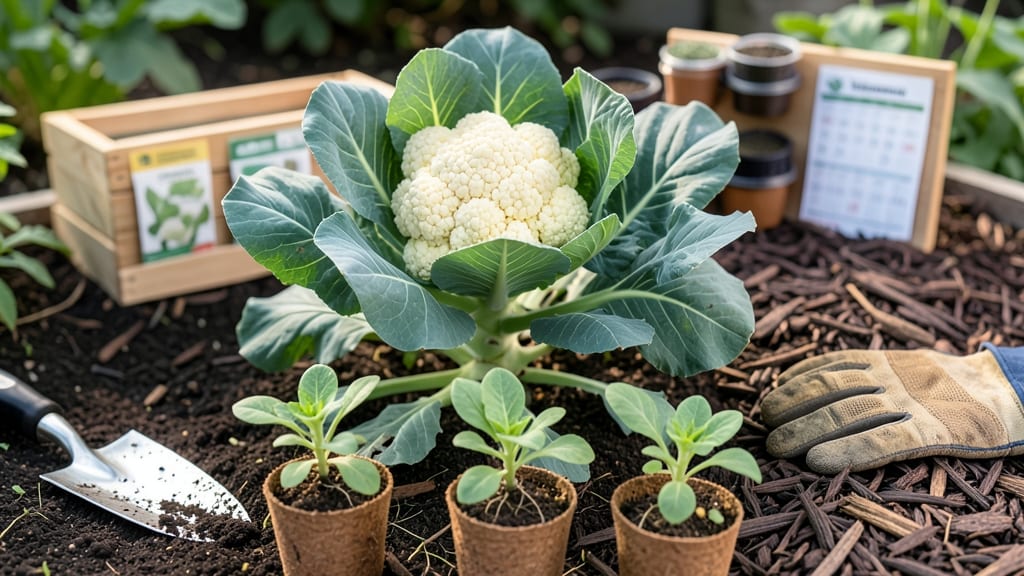
Timing your cauliflower planting in Missouri can make or break your harvest—get it wrong, and you’ll either watch your plants bolt before forming heads or lose everything to early frost.
As a Missouri gardener, I’ve learned the hard way that this cool-weather crop thrives when planted at just the right moment, and missing that window means missing out on crisp, flavorful heads all season.
The key is understanding Missouri’s unique climate, where USDA Zones 5 and 6 create a delicate balance between warm soil and cool nights. Spring planting is your best bet, but fall options exist too if you’re willing to play the timing game.
Let me walk you through the exact months that work best in your region, so you can avoid common pitfalls and enjoy a bountiful harvest.
What most gardeners don’t realize is that soil temperature matters just as much as air temperature—cauliflower roots need that 50°F mark to really get going.
I’ll share how to check your soil, when to start seeds indoors (or direct-sow), and how to stretch your growing season with simple tricks that actually work in Missouri’s unpredictable weather.
Ready to grow cauliflower like a pro? By the end of this guide, you’ll know exactly when to plant for zero-bolt success, which varieties handle Missouri’s heat best, and how to keep your plants happy until harvest. Let’s get those heads forming!
Best Missouri planting months for cauliflower: avoid bolting and frost
Missouri’s USDA Zones 5-6 create a unique challenge for growing cauliflower—hot summers and unpredictable frost dates demand precise timing. The key is planting when soil temperatures stay above 40°F (4°C) but before summer heat triggers bolting.
In my experience, spring and fall are your best bets, with specific windows that vary by region (northern vs. southern Missouri).
For spring plantings, aim for March 15 to April 15 in southern Missouri (e.g., St. Louis) and April 1 to May 1 in northern areas (e.g., Kansas City).
This timing ensures seedlings mature before summer heat arrives. Fall plantings should happen between July 1 and August 15, giving heads time to form before the first frost (typically October 15-30 in most areas).
Missouri’s frost-free season varies dramatically—southern regions enjoy 180-210 days, while northern zones may only have 130-160 days. Cauliflower needs 75-90 days to maturity, so calculate backward from your average first frost date (check your local Missouri Climate Center data) to avoid wasted effort.
For example, if frost hits October 20, your last fall planting should be by July 10.
Here’s the golden rule I follow: Never plant cauliflower when daytime temps exceed 80°F (27°C). Heat stress causes bolting (premature flowering), and Missouri summers can be brutal. If you’re pushing the season, use shade cloth or opt for bolting-resistant varieties like ‘Snowball Y Improved.’
🌱
Missouri’s microclimates mean your neighbor’s success might not match yours. For example, St. Louis (Zone 6a) can handle slightly earlier spring plantings than Columbia (Zone 6b), which has hotter summers.
Always adjust by 1-2 weeks based on your local last frost date. Pro tip: Use a soil thermometer to confirm temps—cauliflower roots need consistent warmth to thrive.
If you’re new to Missouri gardening, start with transplants instead of direct sowing. Seedlings from local nurseries (like Burpee or Missouri Botanical Garden sales) are already hardened off and ready for 4-6 weeks of cooler temps.
This gives you a 2-week head start on the season compared to starting from seed. For direct sowing, wait until soil is at least 50°F (10°C) and nighttime temps stay above 45°F (7°C).
One mistake I see often is overestimating Missouri’s fall growing window. While cauliflower can tolerate light frosts (28-32°F/-2 to 0°C), the heads will turn woody and bitter if exposed to hard freezes. In northern Missouri, cover crops with row fabric if frost threatens before harvest.
In southern areas, you might squeeze in a second fall crop by planting August 10-20 with fast-maturing varieties like ‘Purple of Sicily’ (60 days).
For container gardening in Missouri, timing shifts slightly—pots warm up faster, so plant 1-2 weeks earlier than in-ground beds. Just ensure containers have drainage holes and use lightweight potting mix to prevent overheating.
My 5-gallon pots in full sun hit 90°F (32°C) by early June, which is too hot for cauliflower roots.
Remember: Missouri’s humidity is your friend for cauliflower—it loves consistent moisture. But don’t let soil dry out, or heads will split or bolt. Mulch with straw or shredded leaves to retain moisture and keep roots cool during summer’s peak.
This simple step can extend your harvest window by 2-3 weeks.
🌿
How to extend cauliflower season in Missouri: successive planting tips
Missouri’s short growing season makes successive planting your secret weapon for year-round cauliflower harvests. While most gardeners focus on spring and fall, I’ve found that staggered plantings can give you 3-4 harvests per year—even in Missouri’s USDA Zones 5-6.
The trick lies in soil temperature management and choosing the right varieties for each planting window.
Start with an early spring planting (mid-March in southern Missouri, early April in the north) using cold-hardy varieties like ‘Snowball Y Improved.’ Then, follow up with a late spring transplant (May 15-30) to bridge the gap before summer heat arrives.
This two-step approach ensures you’re never without fresh heads during the peak harvest months of June and July.
🌱
- 1. Early Spring (March 15-April 15): Plant cold-tolerant varieties like ‘Purple of Sicily’ (60 days) in cool soil (45-55°F). Use row covers for frost protection.
- 2. Late Spring (May 15-30): Transplant heat-tolerant varieties (e.g., ‘Romanesco’) when soil reaches 50°F+. Mulch heavily to retain moisture.
- 3. Early Fall (July 1-August 15): Sow fast-maturing varieties (70-day types) for October harvests. Avoid planting after August 15—heat stress triggers bolting.
- 4. Late Summer (August 15-Sept 1): Use shade cloth (30-50%) to protect seedlings from 90°F+ temps. Water deeply twice daily to prevent stress.
One of my biggest successes came from container gardening in Missouri’s urban areas. Pots warm up 2-3 weeks faster than in-ground beds, so I plant containers 2 weeks earlier than ground plantings.
Use 5-gallon pots with well-draining mix and place them in partial shade during summer’s peak. This lets me extend the season by 4-6 weeks compared to traditional beds.
For fall extensions, I’ve had great luck with row covers and cold frames. After the first frost (typically October 15-30), drape floating row covers over plants to trap heat and delay bolting.
In northern Missouri, a cold frame can push harvests into early December—just remove it during the day to prevent overheating.
Missouri’s humidity can work in your favor if managed correctly. Cauliflower loves consistent moisture, but stagnant water causes rot. I use drip irrigation on a timer to deliver 1-1.5 inches of water weekly, adjusting for rain.
In summer, I water in the morning to reduce fungal risks like downy mildew, which thrives in Missouri’s damp air.
Pro tip: Succession planting doesn’t mean planting the same variety repeatedly. Mix in different maturity times—for example, plant ‘Snowball’ (85 days) alongside ‘Purple of Sicily’ (60 days).
This way, you’ll have continuous harvests instead of one big batch. In Missouri, this strategy lets me harvest cauliflower from June through November with minimal effort.
🌿