
Plants
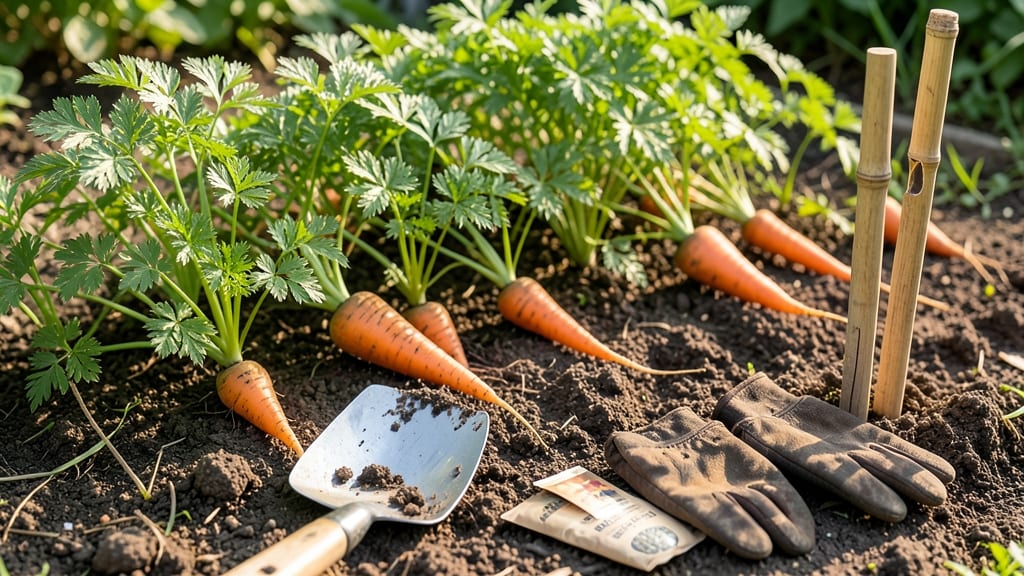
Timing your 🥕 carrot planting in Montana isn’t just about following a calendar—it’s about outsmarting the mountains. With USDA zones 4-6 and frost dates that shift wildly by elevation, one wrong move could leave you with bitter, stunted roots instead of sweet harvests.
Most gardeners in Montana swear by two planting windows: spring (April 15–May 15) and fall (July 15–August 15), but those dates only work if you adjust for your specific zone.
Plant too early, and your seeds will rot in cold soil; too late, and you’ll miss the 120 frost-free days needed for a full harvest.
I’ll show you exactly how to sync your planting with Montana’s microclimates—whether you’re in a valley or high up where frost lingers.
You’ll learn which carrot varieties thrive in your area, how to stretch the season with row covers, and the 3 biggest mistakes that waste Montana gardeners’ time (and money).
Ready to grow carrots that rival the ones at the farmers’ market? Let’s dive into the frost-free window that’ll turn your garden into a crisp, orange success story.
Montana’s carrot planting calendar by elevation Zone
Montana’s diverse elevation zones create unique challenges for carrot growers. Lowland areas like Billings (3,200 ft) enjoy longer growing seasons, while high-altitude regions (7,000+ ft) face shorter frost-free windows. Understanding your elevation-based planting window ensures you avoid frost damage or bolting—key factors for sweet, crisp carrots.
Carrots thrive when soil temperatures reach 50–60°F. In Montana, this typically happens 2–4 weeks after last frost, but timing varies wildly. For example, Missoula (3,200 ft) may see soil warm by mid-April, while Bozeman (4,800 ft) might wait until late May.
Let’s break it down by zone to pinpoint your ideal planting dates.
🌱 Critical Tip: Always check your local USDA Plant Hardiness Zone (Montana ranges from Zone 3–6) and consult your cooperative extension office for hyper-local frost data. A 5°F temperature drop can devastate young seedlings overnight.
🌱 Montana Carrot Planting Guide by Elevation
| Zone | Last Frost Date | Ideal Planting Window | Soil Temp Goal | Harvest Window |
|---|---|---|---|---|
| Lowland (3,000–5,000 ft) | Mid-April to early May | April 15–May 15 (spring) / July 15–Aug 15 (fall) | 50–60°F (2 weeks after last frost) | July–October (spring) / Oct–Nov (fall) |
| Mid-Elevation (5,000–7,000 ft) | Late April to mid-May | May 1–15 (spring) / July 1–15 (fall) | 55–65°F (3 weeks after last frost) | August–September (spring) / Sept–Oct (fall) |
| High-Elevation (7,000+ ft) | Late May to early June | June 1–15 (spring) / July 15–Aug 1 (fall) | 60–70°F (4+ weeks after last frost) | September–October (spring) / Oct–Nov (fall) |
⚠️ Pro Tip: Use row covers to extend your spring planting window by 2–3 weeks in cooler zones.
For lowland Montana (e.g., Great Falls, Helena), aim to plant carrot seeds 2–3 weeks after your last frost date. This aligns with soil warming to 50°F, the minimum for germination.
In mid-elevation areas like Bozeman or Butte, wait until soil hits 55°F—usually late May—to avoid stunted growth.
High-altitude gardeners in Whitefish or Libby should focus on short-season varieties like ‘Early Nantes’ or ‘Paris Market,’ which mature in 50–60 days. Planting in late June ensures harvest before first frost (Sept 20).
Always test soil temperature with a soil thermometer—cold soil delays germination and invites rot.
Fall planting in Montana follows a similar pattern but works backward from your first frost date. For lowland zones, sow seeds by July 15 to harvest before frost.
In high-elevation areas, push planting to July 20–August 1 for a late-season crop. Succession planting every 2 weeks ensures a steady supply.
🌱 Key Variety Tip: Choose ‘Danvers’ for cold tolerance or ‘Chantenay’ for shorter days. Both handle Montana’s unpredictable weather better than long-season types like ‘Imperator.’
Montana’s microclimates can shift planting windows dramatically. A south-facing slope in Missoula might warm 2 weeks earlier than a valley floor just miles away. Observe your garden’s sun exposure and wind patterns—these factors often dictate success more than elevation alone.
Finally, track your local frost dates for 2–3 years to refine your schedule. Montana’s climate variability means a 5-year average might not match your specific microclimate. Start a gardening journal to note adjustments year over year—this is how you master Montana carrot growing.
How to adjust planting for Montana’s microclimates
Montana’s microclimates can vary dramatically even within a few miles, so adapting your carrot planting strategy is key. In lowland areas (3,000–5,000 ft), like Missoula or Bozeman, you’ll have a longer growing season, but higher elevations (7,000+ ft) near Whitefish or Big Sky demand earlier starts and protective measures.
Understanding these differences helps you maximize yields and avoid common pitfalls.
One of the best ways to extend your season is by using row covers or cold frames. These simple tools can push your planting window by 2–4 weeks in both spring and fall.
For example, in USDA Zone 4 areas (like Glacier National Park), start seeds under cover in early April to give them a head start before the last frost. By late May, you can remove covers as soil warms.
Choosing the right carrot varieties also makes a difference. Cold-hardy types like ‘Nantes’ or ‘Danvers’ tolerate Montana’s unpredictable spring frost better than heat-sensitive varieties. These varieties also resist bolting (flowering prematurely) in early spring, which is a common issue when planting too early.
For high-elevation gardens, opt for shorter-season varieties like ‘Paris Market’ to ensure harvest before early frosts.
Another trick is successive planting. Instead of one big planting, spread out your seeds every 2–3 weeks from mid-April to early June. This ensures a steady harvest and reduces the risk of losing your entire crop to a late frost or sudden heatwave.
For example, plant a small batch in early May, another in late May, and a final one in early June to stagger your harvest from July through September.
For high-elevation gardens, consider container gardening or raised beds. These warm up faster in spring and drain better in heavy Montana rains. Fill containers with a light, sandy loam mix to prevent rocky soil from causing forked carrots.
Place them in the sunniest spot of your yard, even if it’s near a south-facing wall, to capture extra warmth.
Finally, monitor soil temperatures closely. Carrot seeds need soil that’s at least 50°F (10°C) to germinate. Use a soil thermometer to check—especially in northern Montana—where cold soils can delay germination by weeks.
If soil is too cold, wait or use a seedling heat mat for a few days to kickstart growth.
By adjusting for your specific Montana microclimate, you’ll enjoy sweet, crisp carrots from spring through fall, even in the most challenging conditions. 🥕🌱
- 📍 Lowland (3,000–5,000 ft): Plant April 15–May 15; use row covers for early starts.
- 🏔️ Mid-Elevation (5,000–7,000 ft): Start seeds under cover in April; remove covers after last frost.
- ❄️ High-Elevation (7,000+ ft): Choose short-season varieties like ‘Paris Market’; plant May 1–June 1.
- 🌡️ Soil Temp Check: Wait until soil reaches 50°F (10°C) for germination.
- 🌿 Stagger Planting: Sow seeds every 2–3 weeks for continuous harvest.
- 📦 Containers/Raised Beds: Ideal for rocky or cold soils in high-elevation areas.