
Plants
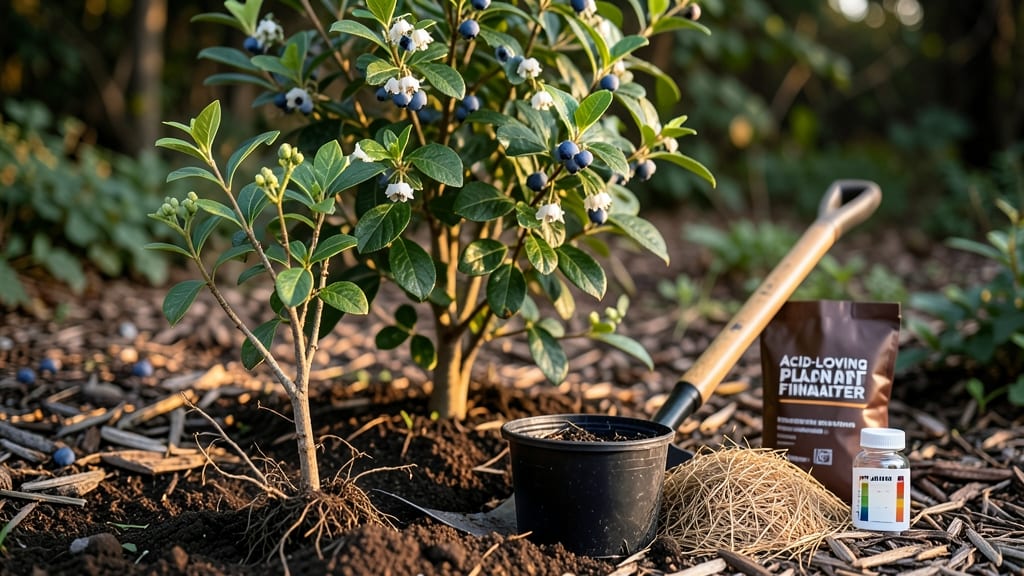
Timing your blueberry bushes' planting in Alabama isn't just about the calendar—it's about beating the state's tricky frost dates and heat spikes to give your 🫐 plants the best possible start.
With USDA zones 7a-8b and last frost dates around March 15, getting it right means the difference between thriving bushes and struggling starts.
Most Alabama gardeners swear by late winter to early spring planting, but the exact window depends on whether you're in the cooler northern part of the state or the milder southern regions.
I'll show you how to align your planting with local frost patterns and variety needs so you don't miss the sweet spot between February and March.
What you'll discover here goes beyond just months—we're talking soil prep secrets, variety-specific timing for Southern Highbush vs. Rabbiteye types, and how container planting changes the rules entirely. Whether you're a first-time grower or a seasoned gardener, these insights will help you avoid common mistakes that waste time and money.
Let's dive into the exact planting schedule that works for Alabama's climate, so you can look forward to that first harvest of juicy berries come May-June. Your blueberry bush's future starts with the right timing—and I've got you covered.
Best planting months for blueberry bushes in Alabama’s frost-free zones
Alabama’s diverse climate—spanning USDA zones 7a-8b—means your blueberry planting window depends heavily on where you live. In northern Alabama (zones 7a-7b), frost can linger until mid-March, while southern Alabama (zones 8a-8b) often sees frost-free conditions by late February.
Timing matters because blueberries need 6-8 weeks to establish roots before summer heat arrives.
For most of Alabama, the ideal planting window is February through early April. This gives bushes time to root before soil temperatures rise above 70°F, which can stress young plants.
In zone 8b (southern Alabama), you can even plant as late as May, but expect slower initial growth due to summer heat.
Bare-root blueberries should always be planted in dormant season (winter or early spring), while container-grown bushes offer more flexibility and can be planted year-round in mild winters. However, avoid planting in extreme heat or drought, as these conditions increase transplant shock.
Here’s how Alabama’s frost-free dates break down by region:
| USDA Zone | Last Frost Date | Best Planting Months | Key Consideration |
|---|---|---|---|
| 7a (North AL) | Mid-March | Late February–Early April | Wait for soil to thaw; protect from late frosts. |
| 7b (Central AL) | Early March | February–Early April | Balanced risk of frost and summer heat. |
| 8a (South AL) | Late February | January–May | Longer window; prioritize early spring for best results. |
| 8b (Southeast AL) | Mid-February | January–June | Can plant year-round; avoid peak summer heat. |
If you’re in zone 7a, aim to plant by April 1st to avoid summer stress. For zone 8b, early spring (February) is still best, but late spring (May) works if you provide extra mulch and shade during the first growing season.
Always check your local Alabama Cooperative Extension Service for updated frost dates, as microclimates can shift planting windows by weeks.
For container planting, you can extend your window slightly. Containers warm up faster in spring, so plant container-grown bushes 2-3 weeks later than bare-root varieties. This gives you flexibility if early spring is unusually cold or wet.
Just ensure your containers have drainage holes and use a well-draining, acidic soil mix (pH 4.5–5.5).
Pro tip: If you miss the spring window, fall planting (October–November) is possible in zones 8a-8b, but avoid it in colder zones where frosts may damage new roots. Fall-planted bushes need extra mulch (3–4 inches) to insulate roots during winter.
One common mistake is assuming "spring" means you can plant anytime after March. In reality, late March plantings in northern Alabama may still face unpredictable frosts, while April plantings in southern Alabama risk summer heat stress. Always monitor your local 7-day forecast and soil temperatures before planting.
Finally, consider your blueberry variety. Some, like Southern Highbush, tolerate heat better than Rabbiteye varieties, which may need earlier planting to establish roots before summer. We’ll dive deeper into variety-specific timing in the next section.
🌱
Best planting months for blueberry bushes in Alabama’s frost-free zones
Alabama’s USDA zones 7a-8b create a unique challenge for blueberry planting because the state’s last frost dates vary dramatically from north to south. In zone 7a (northern Alabama), you’ll typically see frost until March 15, while zone 8b (southern Alabama) may only experience light frosts after February 20.
This means your planting window shifts depending on where you live.
For most of Alabama, the ideal planting window is from mid-February to mid-March. This gives your blueberry bushes time to establish roots before the heat of April and May arrives.
However, if you’re in the southern half of the state, you can push planting slightly later—even into early April—since frost risks are lower.
Container-grown blueberry bushes offer more flexibility. Unlike bare-root plants, which must be planted in their dormant season, containers can be planted year-round in mild Alabama winters. This is a game-changer if you miss the traditional window or want to extend your growing season.
| Zone & Location | Last Frost Date | Best Planting Window | Key Consideration |
|---|---|---|---|
| Zone 7a (North AL: Huntsville, Decatur) | March 15 | Mid-February to early March | Avoid late planting—heat stress risk |
| Zone 7b (Central AL: Birmingham, Montgomery) | March 1 | Late February to mid-March | Balanced frost and heat timing |
| Zone 8a (South AL: Auburn, Dothan) | February 20 | Late February to early April | Extended window for container plants |
| Zone 8b (Southwest AL: Mobile, Gulf Coast) | February 1 | February to early April | Mild winters allow year-round container planting |
If you’re planting bare-root bushes, time it so roots can establish before bud break. For container plants, you can push boundaries—just ensure the soil stays consistently moist during Alabama’s unpredictable spring showers and heat waves.
I’ve found that March planting gives the best balance of root growth and heat tolerance for most varieties.
Pro tip: Use a soil thermometer to check when ground temps hit 40°F—this is your cue that roots can safely grow. In Alabama’s climate, this usually aligns with late February to early March, but always verify locally.
Remember, blueberries are acid-loving plants, so soil prep is just as critical as timing. I’ll cover that in the next section, but for now, mark your calendar for mid-February to March and get ready to plant! 🌱