
Planting
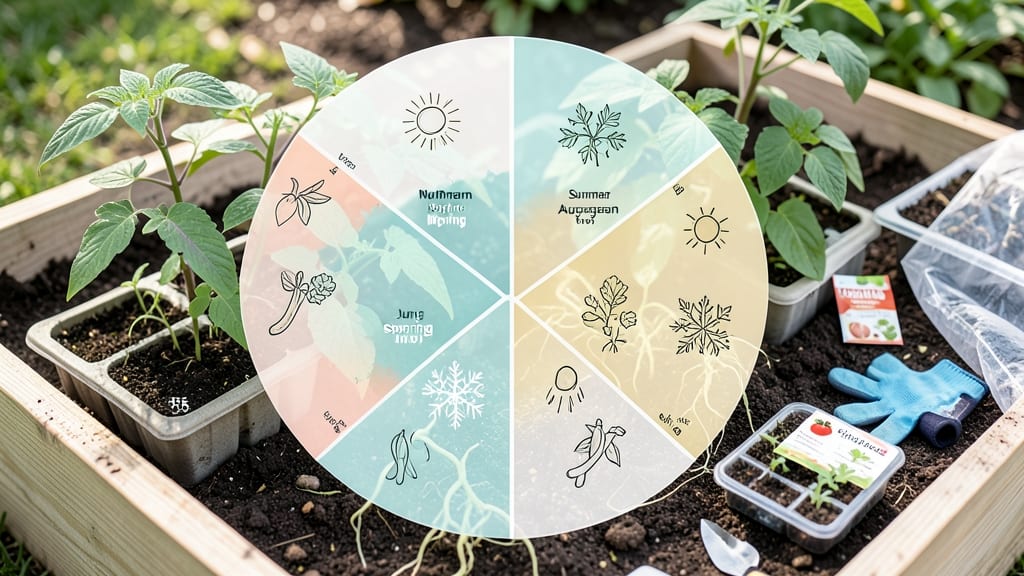
New Brunswick planting dates by hardiness Zone (4-Week critical window)
New Brunswick spans USDA hardiness zones 4a through 6a, meaning your planting window shifts depending on where you live. The last spring frost typically arrives between mid-May and early June, but this can vary by 10-14 days depending on elevation and proximity to the coast.
For example, Fredericton (Zone 5a) usually sees its last frost around May 15, while Saint John (Zone 6a) might be frost-free by May 1.
To simplify, I’ve broken down the 4-week critical planting window for both cool-season crops (like kale and peas) and warm-season crops (like tomatoes and peppers). This window ensures you avoid frost damage while maximizing your harvest.
For instance, Zone 4a gardeners should start cool crops in late April, while Zone 6a gardeners can wait until early May.
Here’s the key: Soil temperature matters more than air temperature. Use a soil thermometer to confirm it’s at least 45°F (7°C) for cool crops and 60°F (15°C) for warm crops.
In New Brunswick, soil warms slowly, so don’t rush—waiting a week for the right conditions can save your entire garden.
| Zone | Cool-Season Crops (Peas, Spinach, Potatoes) | Warm-Season Crops (Tomatoes, Peppers, Cucumbers) | Last Frost Date |
|---|---|---|---|
| 4a (e.g., Grand Falls) | Late April – Early May | Mid-June – Early July | May 20 – June 5 |
| 5a (e.g., Fredericton) | Early May – Mid-May | Late May – Early June | May 15 – May 30 |
| 6a (e.g., Saint John) | Mid-April – Early May | Early May – Mid-May | May 1 – May 15 |
*Adjust dates 1-2 weeks later if your spring is unusually cold.
For warm-season crops, the rule is: Wait until the soil is warm and all frost risk has passed. In Zone 4a, this often means waiting until mid-June, while Zone 6a gardeners can plant as early as late May.
If you’re unsure, use row covers to protect seedlings until the threat of frost is gone.
Pro tip: Keep a frost calendar from the New Brunswick Department of Agriculture handy. They update frost dates annually based on local observations. For example, in 2023, some areas saw their last frost 3 weeks later than average—catching gardeners off guard!
If you’re planting perennials or shrubs, aim for late April to early May in most zones. These plants establish roots slowly, so giving them a head start before summer heat arrives is crucial.
For instance, asparagus crowns should go in the ground 2-3 weeks before your last frost to ensure they’re settled before the soil warms.
Remember, New Brunswick’s growing season is short—typically 120-150 days from last frost to first frost. This means fast-maturing varieties are your best friends. For example, ‘Early Girl’ tomatoes (60 days to harvest) are a safer bet than ‘Brandywine’ (85 days), which might not ripen before frost.
For fall planting, start 6-8 weeks before your first frost (usually September 15-October 1). This gives cool-season crops like broccoli and carrots enough time to mature before winter sets in. In Zone 4a, this might mean planting by mid-August for an early October harvest.
Finally, don’t rely on almanacs alone. Combine frost dates with soil temperature data and your own observations. If your neighbor’s garden thrives with earlier plantings, their microclimate might be warmer—consider factors like south-facing slopes or urban heat islands that can push your zone slightly higher.
How to adjust planting timing for New Brunswick’s unpredictable weather
New Brunswick’s late spring frosts and cool soil temperatures can throw off even the best-laid planting plans. I’ve learned that flexibility is key—what works for Zone 6a in Saint John might fail in Zone 4a Fredericton. The trick is using microclimate awareness and adjustable strategies to protect your plants.
First, check your last frost date (typically May 15 for southern NB, but June 1 in northern areas). Then add a 2-week buffer for warm-season crops like tomatoes and peppers—they need consistent soil temps above 10°C (50°F) to thrive. A soil thermometer is your best friend here!
- Use row covers (like frost blankets) to extend planting by 2-3 weeks for cool-season crops like lettuce and spinach.
- Start warm-season seeds indoors (4-6 weeks before last frost) for tomatoes, peppers, and eggplants—my Zone 4a peppers always get a head start this way.
- Plant cold-hardy varieties like 'Early Girl' potatoes or 'Sugar Snap' peas—they tolerate light frosts and give you an earlier harvest.
Don’t forget about soil temperature—it’s not just about air temps. Use a moisture meter to confirm soil is above 7°C (45°F) before planting warm crops. In my Zone 5a garden, I’ve seen 3-week delays when cool, wet springs keep soil cold longer than expected.
For backup planting dates, note these rules: If frost hits after your first planting window, replant fast-growing crops like radishes or bush beans.
For slower growers (like cabbage), consider a second planting in July for a fall harvest—just be ready to protect with row covers if early frosts return.
Microclimates matter too! South-facing slopes warm up 1-2 weeks earlier than low-lying areas. I’ve planted strawberries in full sun on a south hillside in late April when the valley was still too cold. Observe your yard’s sun exposure patterns and adjust planting zones accordingly.
Finally, keep a planting journal to track what works in your specific microclimate. Last year, my Zone 4a basil thrived when planted June 10, but my neighbor in Zone 5a started hers May 20—same variety, different results!
Adjusting timing based on local observations is the secret to NB gardening success.