
Plants
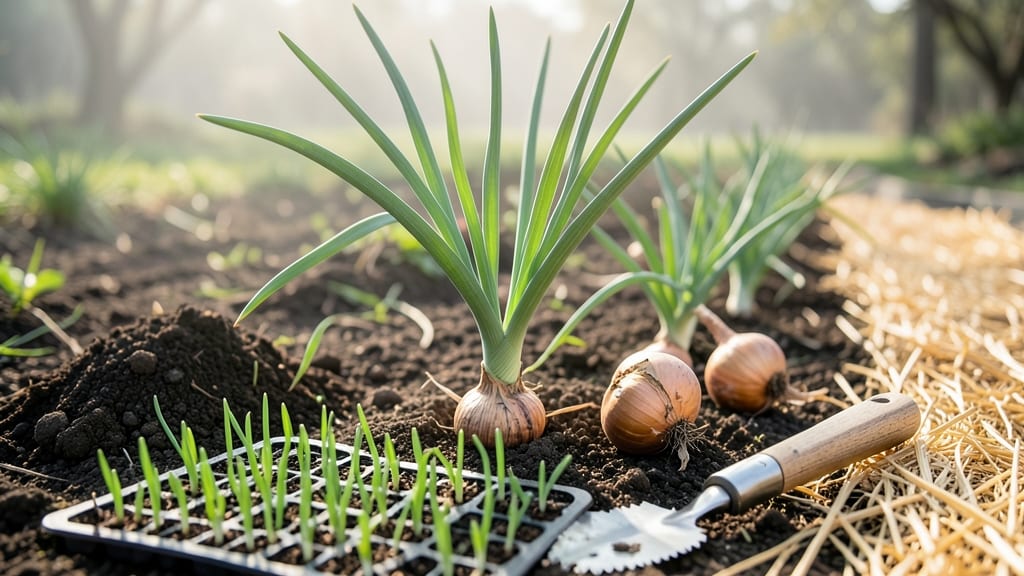
If you've ever planted onions in Georgia only to watch them bolt into flower before forming proper bulbs, you know timing is everything. The state's unique climate—with its hot summers and mild winters—demands a precise planting schedule to grow sweet, flavorful onions year after year.
Most gardeners in Georgia's 7b-9a zones get it wrong by planting too early in spring or too late in fall, leading to wasted effort. The key? Start onions as sets or seeds in late winter (February-March) for spring harvests or in early fall (August-September) for winter storage varieties.
This schedule aligns perfectly with Georgia's frost-free window and heat tolerance.
I'll break down the exact planting windows for your region, whether you're in the cooler Piedmont or the warmer coastal areas. You'll learn how to adjust for microclimates, prevent bolting, and even grow onions successfully in both spring and fall—no more bitter surprises at harvest time.
Ready to grow onions that actually form bulbs instead of flowers? Let's dive into the Georgia-specific timing and techniques that will transform your garden this season.
Georgia’s ideal onion planting calendar: spring vs fall for zero-bolt harvests
Georgia’s mild winters and long growing seasons make it possible to grow onions twice a year—spring and fall—but timing is critical. Plant too early, and your onions will bolt (flower prematurely) in the heat.
Too late, and they won’t mature before frost. The key is understanding short-day vs. intermediate-day varieties and aligning them with Georgia’s climate zones.
For spring onions, aim to plant 4-6 weeks before your last frost date (typically mid-February to early March in most of Georgia). This gives them enough time to establish roots before the heat arrives.
Fall plantings, however, require 90 days before the first frost (usually mid-August to early September), ensuring bulbs mature before winter sets in.
Here’s the breakdown of Georgia’s ideal planting windows:
Georgia’s USDA zones 7b-9a mean your exact dates may vary slightly depending on whether you’re in North Georgia (colder winters) or South Georgia (warmer winters).
For example, gardeners in Athens or Atlanta can push spring plantings to late March, while those in Savannah or Macon might start as early as January for fall crops.
Choose intermediate-day varieties like ‘Texas Early White’ or ‘Candy’ for spring, as they adapt well to Georgia’s long daylight hours without bolting. For fall, opt for short-day varieties such as ‘Yellow Granex’ or ‘1015Y Yellow’, which thrive in cooler temperatures and shorter days.
If you’re growing from sets (small bulbs) instead of seeds, plant them 1 inch deep and 4 inches apart in well-draining soil. For seeds, start them indoors 8-12 weeks before transplanting to avoid the heat stress of direct sowing in summer.
Remember: Consistent soil moisture is key to preventing bolting. Mulch heavily to retain moisture and regulate soil temperature, especially during Georgia’s hot, humid summers. Avoid over-fertilizing with nitrogen, as this can also trigger premature flowering.
With the right timing and variety, you can enjoy fresh onions year-round in Georgia—whether it’s crisp green onions in summer or sweet storage bulbs in winter. The secret is planning ahead and adapting to your local microclimate.
How to adjust onion planting for Georgia’s microclimates (north vs south regions)
Georgia’s climate varies dramatically from the cooler Piedmont region (North Georgia) to the warmer coastal plains (South Georgia), which means your onion planting schedule should adapt accordingly. In North Georgia, where winters are colder and frost lingers longer, you’ll need to start onions earlier in the season.
Meanwhile, gardeners in South Georgia can extend their growing window thanks to milder winters and longer frost-free periods.
For North Georgia (Athens, Dalton, Blue Ridge), aim to plant spring onions in late February to early March to avoid early spring frosts. Fall plantings should begin by mid-August to ensure bulbs mature before the first frost in November.
In South Georgia (Savannah, Macon, Brunswick), you can start spring onions as early as January and push fall plantings to early September for a second harvest.
Here’s what you need to watch for in each region:
Soil preparation also differs by region. In North Georgia, where soils can be clay-heavy, amend with compost and sand to improve drainage. In South Georgia, focus on adding orgnaic matter to sandy soils to retain moisture.
Both regions benefit from well-draining soil with a pH of 6.0-7.0, but North Georgia may need extra mulch to insulate roots during cold snaps.
For indoor seed starting, North Georgia gardeners should begin onions indoors in January for spring transplants, while South Georgia can wait until February.
If you’re direct-sowing, North Georgia’s shorter growing season means you’ll need to use fast-maturing varieties like ‘Texas Early White’ (90 days to maturity), while South Georgia can experiment with longer-season varieties like ‘1015Y Yellow’ (120 days).
One trick for both regions? Use shade cloth in summer to protect onions from bolting. In North Georgia, apply it in June-July when temperatures exceed 85°F. In South Georgia, where heat arrives earlier, start shade cloth by May and keep it on through August.
This simple step can save your harvest from turning bitter.
By adjusting your planting schedule and soil prep to match your microclimate, you’ll enjoy sweet, zero-bolt onions whether you’re in the mountains or by the coast. The key is flexibility—watch your local frost dates, soil conditions, and heat patterns to fine-tune your approach each season.