
Flowers
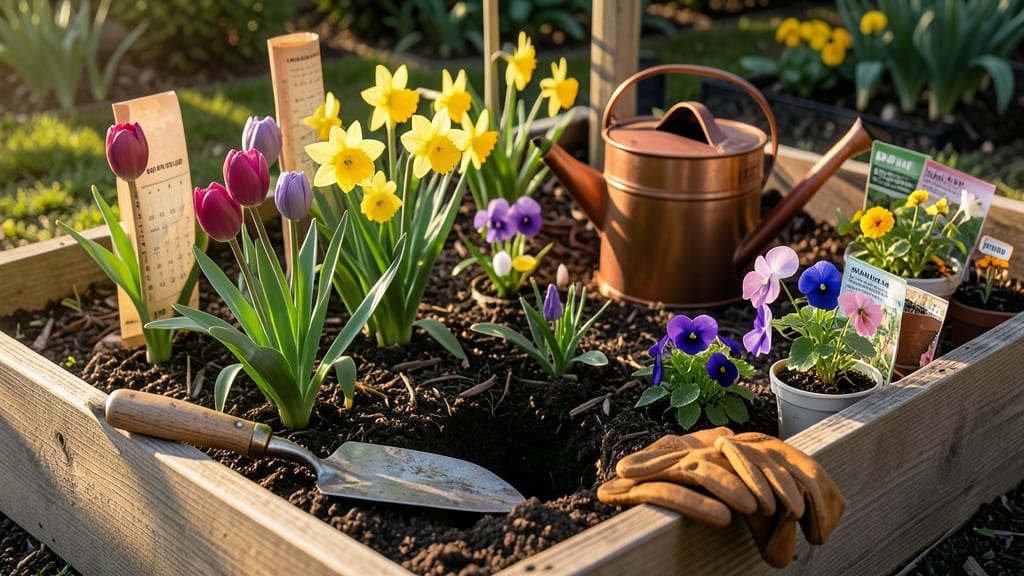
USDA zone planting chart for spring flowers by region
Planting flowers at the right time in spring depends heavily on your USDA hardiness zone. Each zone has a unique last frost date, which signals when it’s safe to plant.
For example, gardeners in Zone 3 (like Minnesota) can start planting cool-season flowers like pansies as early as late April, while those in Zone 10 (like Southern California) might plant warm-season flowers like marigolds in February. Understanding your zone ensures your flowers thrive, not just survive.
Cool-season flowers (e.g., tulips, daffodils, snapdragons) tolerate frost and can often be planted 4-6 weeks before your last frost date. Meanwhile, warm-season flowers (e.g., zinnias, petunias, impatiens) need to wait until after the last frost when soil temperatures are consistently above 50°F (10°C).
Let’s break down the ideal planting windows for each zone to help you plan your spring garden like a pro.
| USDA Zone | Cool-Season Flowers (Plant Before Last Frost) | Warm-Season Flowers (Plant After Last Frost) | Soil Temp Requirement |
|---|---|---|---|
| Zones 3-5 | Late April - Early May | Mid-May - Early June | 45°F (7°C) minimum |
| Zones 6-7 | Early April - Mid-April | Late April - Early May | 50°F (10°C) minimum |
| Zones 8-9 | Late February - Early March | Mid-March - Early April | 55°F (13°C) minimum |
| Zone 10 | January - February | February - March | 60°F (15°C) minimum |
For example, if you’re in Zone 6a (like much of the Midwest), your last frost date is typically around April 15.
This means you can plant cool-season flowers like pansies or snapdragons in early April, while warm-season flowers like marigolds or zinnias should wait until late April or early May. Always double-check your local last frost date using resources like the National Weather Service or Old Farmer’s Almanac for precise timing.
Another critical factor is soil temperature. Most flowers need soil that’s at least 50-60°F (10-15°C) to germinate properly. You can use a soil thermometer to check—if it’s cooler than recommended, wait a few days or use black plastic mulch to warm the soil faster.
This is especially important for warm-season flowers, which can rot in cold soil.
Don’t forget about microclimates—areas in your garden that may have slightly different conditions. For instance, a south-facing wall can warm up faster than the rest of your yard, allowing you to plant heat-loving flowers like geraniums a few weeks earlier.
Conversely, low-lying areas might stay colder longer, so adjust your planting timeline accordingly. Observing your garden’s unique conditions will help you fine-tune your schedule for maximum success.
If you’re unsure about your zone, you can find it using the USDA Plant Hardiness Zone Map. Simply enter your ZIP code, and you’ll get your exact zone along with a detailed planting guide for your area.
This tool is a game-changer for beginners and seasoned gardeners alike, ensuring you’re planting at the optimal time for your specific location.
Once you’ve nailed down your zone and last frost date, the next step is preparing your soil. Loosen the top 6 inches of soil, mix in compost or aged manure, and ensure proper drainage.
Well-prepared soil sets the stage for healthy, vibrant flowers that bloom all season long. With the right timing and care, your spring garden will be a burst of color you’ll love.
Pro tip: Keep a gardening journal to track your planting dates, weather conditions, and flower performance. Over time, you’ll notice patterns and refine your timing for even better results year after year. Happy planting!
How to time flower planting using frost dates and moon phases
Planting flowers at the right time in spring isn’t just about checking a calendar—it’s about understanding your local climate and natural cycles. The last frost date is your first clue, but soil temperature and even the moon’s phases can influence success.
Let’s break down how to use these factors to plant with precision.
Start by finding your average last frost date for your USDA zone. This date marks when temperatures consistently stay above 32°F (0°C) at night. For example, in Zone 5, this is typically mid-May, while in Zone 9, it could be as early as February.
Websites like the National Weather Service or local agricultural extensions provide this data for free.
🌱
Use a soil thermometer to confirm the ground has warmed to at least 60°F (15°C). Cool soil can stunt root growth, even if air temperatures are mild.
Urban areas can be 5–10°F warmer than rural zones due to concrete and buildings. High-altitude gardens may need to wait 2–4 weeks later than lowland areas.
Plant during the waxing moon (increasing light) for root crops and flowers. Avoid the waning moon (decreasing light) to prevent leggy growth.
If starting indoors, harden off seedlings 7–10 days before transplanting. Place them outside for 2–3 hours daily, gradually increasing exposure.
Use frost cloths or row covers for 2–3 weeks after planting to shield tender flowers like petunias or geraniums from late frosts.
For cool-season flowers like pansies or snapdragons, you can plant 4–6 weeks before your last frost date. These hardy annuals thrive in 50–60°F (10–15°C) soil and can even handle light frosts.
In contrast, warm-season flowers such as zinnias or marigolds need to wait until after the last frost and soil temperatures reach 70°F (21°C).
Don’t overlook the moon’s phases—traditional lunar planting suggests planting flowers during the growing moon (from new moon to full moon) for stronger roots. Pair this with your frost date calculations, and you’ll have a bloom-boosting strategy tailored to your garden’s unique conditions.
✂️