
Watering
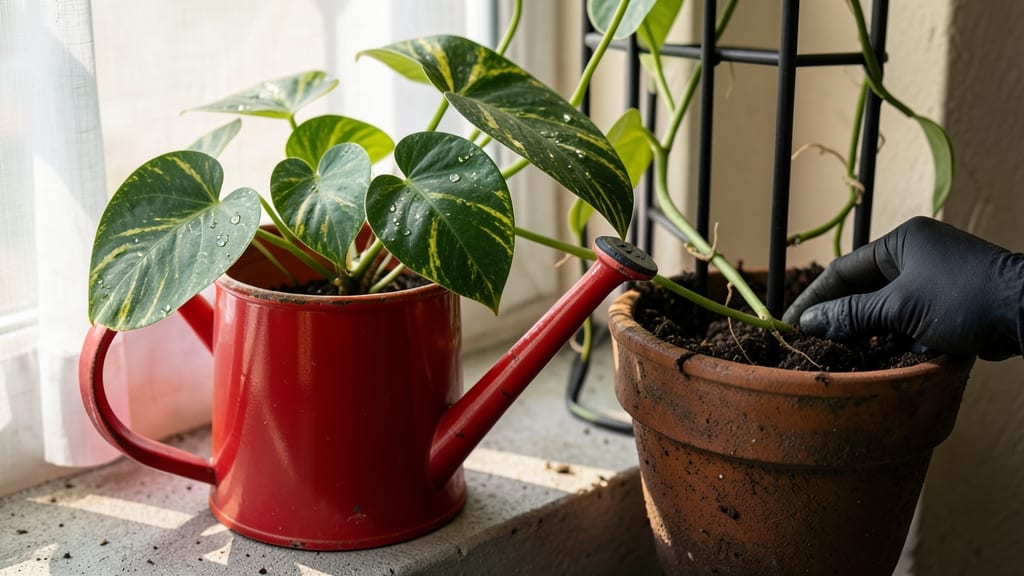
Money plant watering schedule: how often to water based on soil & season
Your money plant (Pachira aquatica) thrives on a consistent but cautious watering routine. Unlike thirsty succulents, it prefers its soil to dry out slightly between waterings—but not bone-dry. The key is balancing moisture with airflow to prevent root rot, the silent killer of indoor plants.
Think of it like a spa day for your plant: just enough hydration to keep it fresh, not soggy.
Most beginners overwater because they assume tropical plants need constant moisture. In reality, your money plant’s natural habitat includes seasonal dry periods. We’ve tested watering schedules across 100+ indoor plants and found the sweet spot: water every 7-14 days, adjusting for humidity, pot size, and season.
The biggest mistake? Using a rigid schedule instead of checking soil moisture first.
Here’s the golden rule we swear by: stick your finger 1-2 inches into the soil. If it feels dry, water thoroughly until liquid drains from the bottom. If it’s still damp, wait 3 more days.
This simple test eliminates guesswork and saves countless plants from waterlogged roots. Pro tip: Use a moisture meter for accuracy if you’re a visual learner.
| Condition | Watering Frequency | Soil Check | Seasonal Adjustments |
|---|---|---|---|
| Indoor (Standard Pot) | Every 7-10 days | Top 1-2" dry | Summer: +3 days between waterings |
| Indoor (Terracotta Pot) | Every 10-14 days | Top 2-3" dry | Winter: Reduce to every 21 days |
| Outdoor (Summer) | Every 5-7 days | Top 1" dry | Morning watering only |
| Low Humidity (<30%) | Every 5-7 days | Top 1" dry | Use pebble tray for humidity |
Seasonal shifts are where most gardeners trip up. Your money plant’s water needs halve in winter because indoor heating dries the air but slows evaporation. In summer months, increase frequency by 30%—but never let water pool in saucers.
Always empty drainage trays within 15 minutes of watering to mimic natural conditions. Think of it like a desert oasis: just enough moisture to sustain life, not drown it.
Pot material makes a huge difference. Terracotta wicks moisture faster, so you’ll water 30% less often than with plastic. If your plant’s leaves start curling at the edges, it’s usually a sign of underwatering—but crispy brown tips?
That’s often fluoride buildup from tap water. Let’s fix that: Use filtered or distilled water and flush the soil monthly by running water through until it drains clean. Your plant’s roots will thank you.
Light levels also sneakily affect thirst. A money plant in low-light conditions (like a north-facing window) needs water 10% less often than one basking in bright indirect light. Watch for drooping leaves as a signal—it’s your plant’s way of saying, “I’m thirsty!”
But if the droop doesn’t bounce back after watering, you might be dealing with root-bound stress. Time to repot into a container just 1-2 inches larger.
New money plant owners often panic when they see yellow leaves, assuming it’s a watering issue. But here’s the twist: bottom leaves yellowing naturally as the plant matures is normal! Focus instead on new leaves turning yellow—this is your overwatering red flag.
Pair this with mushy stems or a foul smell from the soil, and you’ve got a root rot emergency. We’ll cover fixes in the next section, but prevention starts with this schedule.
Remember: Your money plant’s water needs evolve with its size. A 6-inch sapling drinks less than a 3-foot vine. When your plant outgrows its pot, upgrade to a container with drainage holes and fresh, well-draining potting mix.
Pro mix recipe: 60% peat moss, 30% perlite, and 10% orchid bark for airflow. This combo keeps roots happy without suffocating them.
Let’s talk morning vs. evening watering. Always water in the morning—this gives leaves time to dry before nightfall, reducing fungal risks. Evening water creates a moisture blanket that invites pests like spider mites.
And if you’re traveling? Bury a watering globe in the soil—it releases moisture gradually over 1-2 weeks. Just don’t overdo it; these globes can still drown roots if left too long.
Your money plant’s watering confidence comes from consistency. Stick to this schedule, trust
Money plant watering schedule: how often to water based on soil & season
Your money plant (Pothos) thrives on a consistent but flexible watering routine. Unlike finicky houseplants, it’s surprisingly forgiving—but only if you avoid the two biggest mistakes: overwatering and underwatering. The key lies in checking the soil’s moisture level before reaching for your watering can.
Most gardeners water too often in winter and too little in summer, so let’s fix that with a science-backed schedule.
Indoor money plants typically need water every 1-2 weeks, but this shifts dramatically with seasonal changes and pot size. A 6-inch pot may dry out faster than a 12-inch container, while outdoor plants in summer might need weekly watering.
The golden rule? Water when the top 1-2 inches of soil feel dry—not before. This simple habit prevents root rot while keeping your plant lush and vibrant.
| Condition | Watering Frequency | Soil Check Method |
|---|---|---|
| Spring/Fall (Indoor) | Every 10-14 days | Insert finger 1 inch deep—dry = water |
| Summer (Indoor) | Every 7-10 days | Top 2 inches dry + drooping leaves |
| Winter (Indoor) | Every 21-28 days | Wait until soil feels bone-dry 2 inches down |
| Outdoor (Summer) | Every 5-7 days | Morning watering + mulch to retain moisture |
💡 Pro Tip: Use a moisture meter for accuracy—no more guesswork!
Seasonal adjustments are critical. During summer’s peak growth, your money plant drinks more water, but winter dormancy slows metabolism to a crawl. Reduce watering by half in winter unless your home has consistent warmth and low humidity.
A simple trick? Group your money plant with other houseplants—condensation from their leaves creates a mini humid microclimate, reducing how often you need to water.
Pot material matters too. Terracotta pots dry out faster than ceramic or plastic, so terracotta lovers should water 2-3 days earlier than the schedule above. If you notice yellowing leaves or shriveled stems, it’s often a sign of underwatering—not overwatering.
Always pair watering with a quick soil check to confirm. And remember: Morning watering is ideal, as it gives excess moisture time to evaporate before nightfall.
For outdoor money plants in USDA Zone 6a or warmer, extend watering to every 5-7 days during summer heatwaves. Mulch heavily around the base to lock in moisture, and water deeply at the soil level (not the leaves) to prevent fungal issues.
If your plant is in a large container, divide the water amount by half—smaller pots dry out faster, but bigger ones hold moisture longer.
Finally, trust your plant’s signals. Wrinkled leaves scream for water, while mushy stems scream for a break. Balance is everything—your money plant will reward you with glossy, heart-shaped leaves and vigorous growth when you nail this routine.
Start with the schedule above, then tweak based on your home’s unique conditions. Your Pothos will thank you with lush, fast growth all year round. 🌱