
Plants
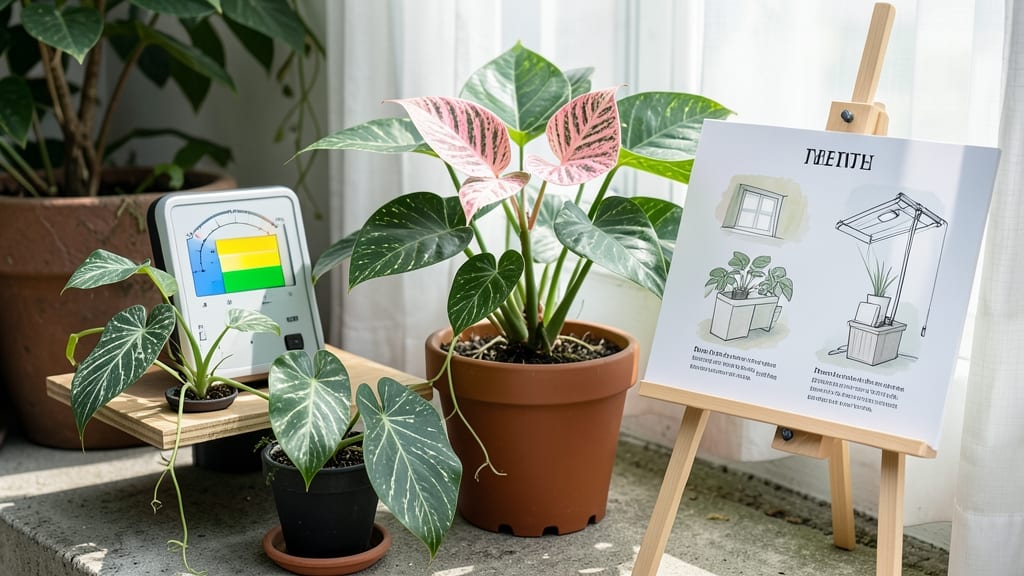
Ideal light requirements for arrowhead plants by growth stage
Arrowhead plants (Syngonium) thrive in bright indirect light, but their needs change as they grow. As a houseplant enthusiast, I’ve learned that seedlings, mature plants, and flowering stages all require slightly different light conditions to stay healthy.
Understanding these stages will help you avoid common issues like yellowing leaves or stunted growth—both signs of poor lighting.
For seedlings, bright indirect light is crucial for strong root development. Place them near an east-facing window where morning sun is gentle. Avoid direct sunlight, which can scorch tender new leaves.
If natural light is limited, supplement with a LED grow light for 12 hours daily. This mimics natural conditions and prevents leggy growth.
Mature arrowhead plants need 4-6 hours of bright indirect light daily. Position them 2-3 feet away from a north or east-facing window to avoid harsh afternoon rays.
South-facing windows can work, but use a sheer curtain to diffuse the light. Without enough light, mature plants may develop dull, pale leaves and grow slowly.
When your arrowhead plant flowers, it signals it’s ready for slightly more light—up to 6 hours of indirect sunlight. However, avoid placing it in direct sun, which can cause leaf burn (brown patches on edges).
If you notice new leaves curling or turning yellow, it’s a sign of too much light. Rotate the plant occasionally to ensure even growth.
| Growth Stage | Light Needs | Ideal Placement | Signs of Stress |
|---|---|---|---|
| Seedlings | Bright indirect light (12+ hours) | East-facing window or grow light | Leggy stems, weak leaves |
| Mature Plants | 4-6 hours bright indirect light | 2-3 ft from north/east window | Yellowing leaves, slow growth |
| Flowering Stage | 6 hours indirect light | Filtered south window or grow light | Brown leaf edges, curled leaves |
If your home lacks natural light, artificial grow lights are a game-changer. I recommend a full-spectrum LED bulb placed 6-12 inches above the plant for 10-12 hours daily.
This replicates sunlight and prevents etiolation (elongated, weak stems). For beginners, a simple fluorescent bulb works too—just ensure it’s within 12 inches of the plant.
Seasonal adjustments are key. In winter, when daylight is shorter, supplement with artificial light. In summer, watch for direct sunlight creeping through windows—move your plant back if leaves start crisping. A simple trick is to rotate the pot weekly so all sides get even light exposure.
Pro tip: Use a light meter (or your phone’s light sensor app) to check intensity. Arrowhead plants thrive at 1,000-3,000 lux. If readings are below 1,000 lux, it’s time to relocate or add grow lights.
Over time, you’ll learn to read your plant’s cues—dark green leaves mean it’s happy, while lighter green signals a need for more light.
Remember, arrowhead plants are versatile but not sun-worshippers. They’ll survive in lower light, but expect slower growth and fewer leaves. For the healthiest, most vibrant plant, aim for bright indirect light and adjust as it grows.
With the right lighting, your arrowhead will reward you with lush foliage and occasional blooms.
How to adjust your home’s lighting for an arrowhead plant’s success
Your arrowhead plant thrives in bright indirect light, but most homes don’t offer perfect conditions. The key is mimicking natural light—whether through window placement or artificial solutions. Start by auditing your space: east-facing windows provide gentle morning sun, while north-facing windows offer consistent, soft light year-round.
If your home lacks natural light, LED grow lights are a game-changer. Position them 6-12 inches above your plant for 12-14 hours daily. Avoid placing them too close, or you’ll risk leaf burn—a common mistake that turns crispy brown edges.
Seasonal changes also impact lighting. In winter, shorter days mean your plant may need supplemental light. Rotate the pot quarter-turns weekly to ensure even growth, preventing lopsided leaves.
For renters or those with limited space, reflective surfaces like mirrors or white walls can boost natural light by 30%. Place your plant near a west-facing window for afternoon brightness, but shield it from harsh afternoon sun with sheer curtains.
🔹 Pro Tip: Test your lighting setup for 2 weeks. If leaves yellow or stretch toward the light, adjust placement or add a grow light.