
Plants
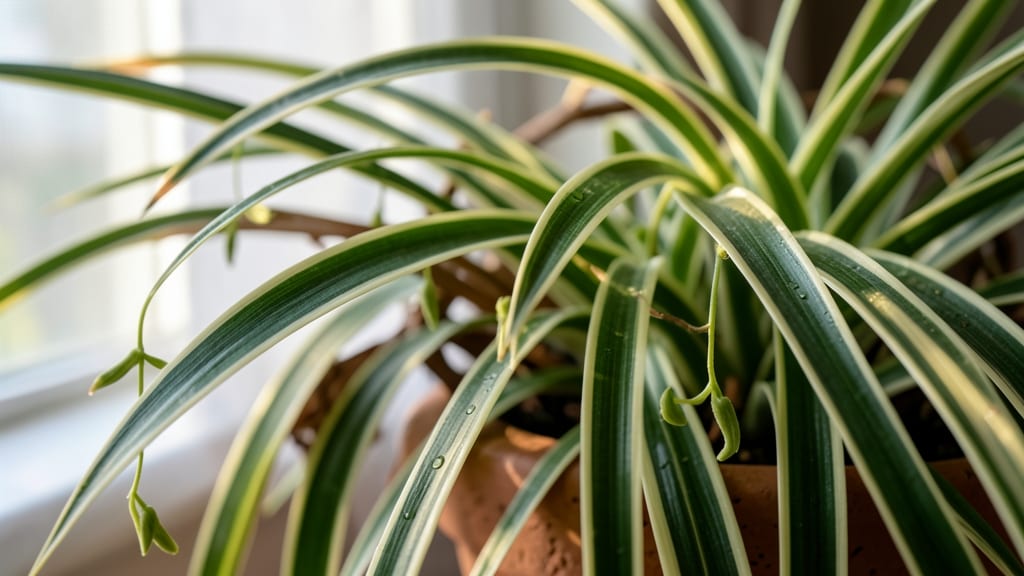
If your 🕷️ Spider Plant is struggling with brown tips or slow growth, the answer to how much light does a spider plant need indoors might be right under your nose—or rather, above it.
The right amount of light can transform your leafy friend from a sad, sparse plant into a lush, thriving beauty, but getting it just right indoors is trickier than you think.
Most people assume Spider Plants need bright, direct sunlight, but that’s actually a common mistake. These hardy plants thrive in bright indirect light, which means finding that sweet spot near a window without letting harsh rays fry their leaves.
I’ll show you exactly how to spot the perfect location in your home and what to do if your plant is sending distress signals.
Whether you’re dealing with a dim office corner or a sun-drenched kitchen, we’ll cover how to adjust your setup for optimal growth. You’ll learn the signs of over- and under-lighting, plus easy fixes to keep your Spider Plant happy year-round.
From leggy stems to crispy edges, I’ll walk you through diagnosing light issues and reviving your plant before it’s too late. By the end, you’ll have a foolproof system to keep your 🕷️ Spider Plant looking its best—no guesswork required.

Ideal light requirements for spider plants indoors: bright indirect light explained
Your spider plant (Chlorophytum comosum) thrives in bright indirect light, making it perfect for most indoor spaces. Unlike sun-worshipping plants, spider plants despise harsh direct sunlight, which can scorch their delicate leaves.
The key is finding that sweet spot where natural light filters gently through curtains or sheer fabrics—think east-facing windows or north-facing spots that avoid midday sun.
Indoors, spider plants typically need 4-6 hours of bright indirect light daily to maintain their vibrant green-and-white striped foliage. This light intensity is roughly equivalent to standing 2-3 feet away from a window during daylight hours.
If your windows face west or south, you’ll need to position the plant slightly farther back to prevent leaf burn.
Here’s how to visualize the perfect light: Imagine your plant sitting under a dappled shade tree outdoors. That’s the ideal indoor lighting scenario. Direct sunlight through glass acts like a magnifying glass, intensifying UV rays and causing yellowing or crispy brown edges on leaves.
Too little light, however, leads to pale, leggy growth and fewer "spiderettes" (those adorable baby plantlets).
Light Intensity Rating for Spider Plants
If you’re unsure whether your space meets these light requirements, try this simple test: Hold your hand near the plant’s leaves during peak daylight hours. If you can’t see your shadow clearly or the light feels dim, your spider plant likely needs a brighter spot.
Conversely, if the leaves feel warm to the touch, it’s getting too much direct sun.
North-facing rooms often provide the gentlest light for spider plants, while south-facing windows can deliver intense afternoon rays. A quick fix? Hang a sheer curtain to diffuse harsh sunlight. East-facing windows offer morning light without the midday intensity, making them ideal for most homes.
West-facing windows require extra caution—move your plant at least 5 feet away to avoid leaf damage.
Watch for these visual cues to gauge if your spider plant is getting the right light: Healthy leaves should be bright green with white stripes, upright, and firm to the touch.
If you notice yellowing leaves or brown tips, it’s often a sign of overwatering combined with too much light. Conversely, pale, stretched-out leaves indicate the plant is reaching for more light—a classic sign of underlighting.
Pro tip: Rotate your spider plant quarter-turns every 2-3 weeks to ensure even light exposure. Plants naturally grow toward light sources, so rotation keeps their foliage balanced and prevents lopsided growth. This simple habit encourages bushier, more uniform growth and maximizes your plant’s exposure to beneficial light.
For those in low-light apartments or offices with minimal natural light, don’t despair. Spider plants are remarkably adaptable and can tolerate low-light conditions for extended periods, though their growth may slow. In such cases, supplement with a 10-12 hour LED grow light placed 6-12 inches above the plant.
Even a few hours of grow light daily can make a noticeable difference in leaf vibrancy and growth rate.
Remember, the goal isn’t perfection—it’s creating an environment where your spider plant feels comfortable and secure. With the right light, this hardy houseplant will reward you with lush foliage, occasional baby spiderettes, and years of low-maintenance beauty. 🌱
How to adjust your home’s lighting for a thriving spider plant
Not every home has a perfect east-facing window, but that doesn’t mean your 🕷️ Spider Plant is doomed. With a few clever adjustments, you can create the ideal bright indirect light conditions—even in dim offices or south-facing rooms.
Start by assessing your space: apartments with small windows, offices with artificial lighting, or north-facing rooms with limited sunlight all require different solutions.
If your plant is currently in a low-light corner, try rotating the pot quarter-turn weekly to ensure even growth. This simple trick prevents lopsided development and helps the plant stretch toward whatever light it can find.
For south-facing windows, use a sheer curtain to diffuse harsh afternoon rays, which can scorch delicate leaves. The goal is filtered sunlight, not direct beams.
Here’s how to test your lighting: Place a white piece of paper near your plant for a few hours. If the shadows are sharp and dark, the light is too direct. If the paper stays almost untouched, you’ve got low-light conditions that need supplementation.
A quick DIY fix? Move the plant closer to the window—just 2-3 feet away is ideal for most homes.
💡 Quick Fixes for Different Lighting Challenges
- Dim Rooms: Use a grow light 6-12 inches above the plant for 12-14 hours/day.
- Bright Direct Sun: Place a sheer curtain between the plant and window to diffuse light.
- North-Facing Windows: Move the plant within 2 feet of the glass for maximum exposure.
- Offices/Artificial Light: Supplement with a LED grow bulb (5000K color temperature).
- Leggy Growth: Trim back overly stretched leaves and relocate to a brighter spot immediately.
For grow lights, invest in a full-spectrum LED bulb (like the Sylvania Grow Lux)—they mimic natural sunlight without the heat. Position it 12-18 inches above the plant and set a timer for 12 hours/day to mimic daylight cycles.
Avoid leaving it on 24/7, as Spider Plants need rest just like we do. Pro tip: Rotate the plant weekly under artificial lights to prevent one-sided growth.
If you’re still seeing pale leaves or slow growth, your plant might need a light boost. Try placing it on a sunny bookshelf or near a skylight—even indirect light from above counts!
For renters, a reflective surface (like a mirror) behind the plant can bounce extra light onto the leaves. Small changes make a big difference for these adaptable plants.
Remember, Spider Plants are forgiving—they’ll survive in low light, but they’ll thrive in the right conditions. Start with one adjustment (like moving closer to a window or adding a grow light), monitor for 2 weeks, and tweak as needed.
Your plant will thank you with vibrant new growth and those coveted spiderettes! 🌱