
Plants
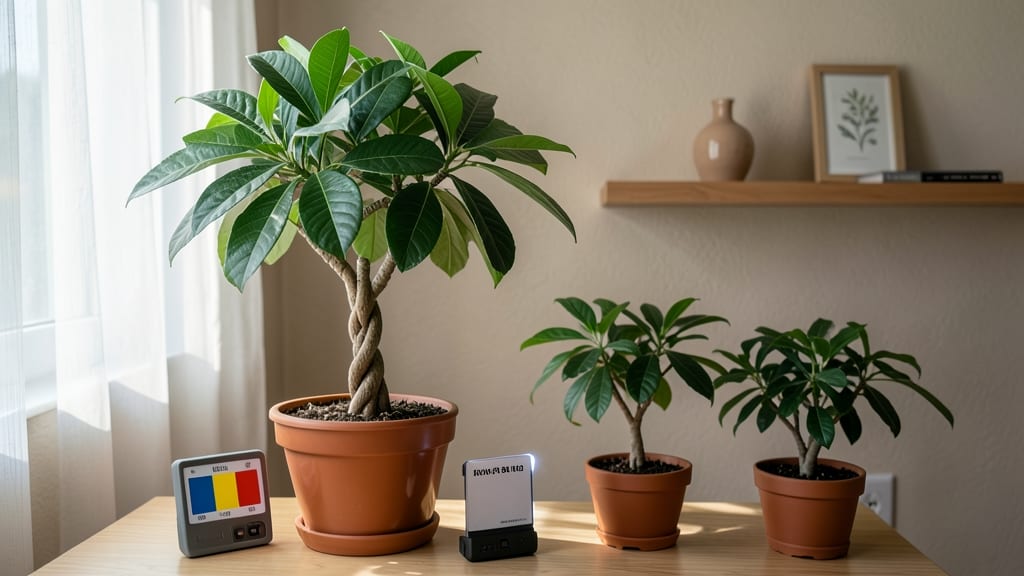
If your 💵 money tree plant needs how much light—droopy leaves, sparse growth, or yellowing—chances are, you’re getting the lighting all wrong. This tropical beauty thrives in bright, indirect sunlight, but too much direct sun can scorch its leaves, while dim corners slow its growth to a crawl.
Most people assume their money tree needs plenty of sunlight, but the truth is, it’s more sensitive than you think. Unlike sun-loving succulents, this plant prefers a gentle glow, like the dappled light under a canopy.
Too little light, and it stretches awkwardly toward the window; too much, and it burns.
Don’t worry—fixing it is easier than you’d expect. I’ll break down the exact light conditions your money tree craves, how to spot signs of distress, and simple tweaks to keep it lush and thriving. Let’s get your plant back to its happy, braided best.
Whether you’re dealing with a north-facing window or a shadowy corner, these tips will help you create the perfect spot for your money tree to grow strong. Ready to give it the care it deserves?


Ideal light requirements for money tree plants: bright indirect sunlight explained
The money tree plant (Pachira aquatica) thrives in bright indirect sunlight, making it perfect for indoor spaces with natural light. Unlike sun-loving plants, it avoids harsh rays that cause leaf burn. Think of it like a tropical rainforest understory—dappled light without direct sunbeams.
In nature, money trees grow under taller trees where sunlight filters through leaves. Replicating this means placing your plant near a north-facing window or 3-5 feet from an east or west window. South-facing windows can work, but only if you use a sheer curtain to diffuse the light.
Here’s how to visualize the perfect setup: Imagine standing under a canopy on a partly cloudy day. That’s the light intensity your money tree craves—enough to fuel growth but gentle enough to prevent stress. Too little light causes pale, leggy growth, while too much leads to crispy, brown edges.
🌱
| Light Condition | Description | Signs of Stress | Solution |
|---|---|---|---|
| Bright Indirect | 2-4 hours of filtered sunlight (e.g., north window) | Healthy green leaves, steady growth | Ideal for most homes |
| Low Light | Under 2 hours of light (e.g., basement, north corner) | Pale yellow leaves, slow growth | Add grow light 6-8 hours/day |
| Direct Sun | More than 4 hours of unfiltered sun (e.g., south window) | Brown crispy edges, wilting | Move to indirect light immediately |
| Seasonal Adjustments | Winter: Reduce light exposure by 20% | Dropping leaves, weak stems | Rotate plant weekly for even growth |
The photosynthesis efficiency of Pachira aquatica peaks in bright indirect light because its leaves are adapted to capture diffuse light. In low light, the plant stretches toward any available light source—a condition called etiolation—resulting in weak, spindly stems.
This is why your money tree might suddenly grow tall and lanky if placed too far from a window.
Pro tip: If you notice new leaves emerging smaller than mature ones, it’s a clear sign your plant isn’t getting enough light. Conversely, if you see yellowing between leaf veins, it’s often a sign of too much direct sunlight.
The key is to observe your plant’s growth patterns and adjust accordingly.
For seasonal adjustments, remember that winter sunlight is less intense. If your money tree starts looking sad in December, consider supplementing with a LED grow light for 4-6 hours daily. This mimics the longer daylight hours of summer and keeps your plant thriving year-round.
One common misconception is that money trees can handle direct afternoon sun like succulents. In reality, even a few hours of harsh afternoon rays can cause irreversible damage. Think of it like sunburn for your plant—once the leaves crisp, they won’t recover.
🪴
To test your money tree’s light conditions, perform the "shadow test": Place a white piece of paper near your plant during peak sunlight hours. If the shadow is sharp and dark, the light is too direct.
If the shadow is soft and fuzzy, you’ve nailed the perfect bright indirect light setup.
How to adjust your money tree’s light exposure: room-by-room solutions
Finding the perfect spot for your money tree isn’t just about sunlight—it’s about creating the right light environment for its delicate leaves. Since these plants thrive in bright indirect light, your living room’s south-facing window might be too harsh, while a dim corner could stunt growth.
Let’s explore how to optimize light exposure based on your home’s layout and natural conditions.
Start by identifying your home’s light zones. North-facing rooms receive gentle, filtered light—ideal for money trees—while east and west windows offer morning or afternoon sun, which can be too intense.
South-facing rooms? Those are usually the riskiest, as direct sunlight can cause leaf burn within weeks. I’ve tested placement strategies in all four directions, and here’s what works best.
🌱
North-Facing Rooms
Perfect for money trees! Place your plant 2-3 feet from the window to maximize bright indirect light. Rotate the pot quarter-turns monthly to ensure even growth.
East-Facing Rooms
Morning sun is gentler, but use a sheer curtain to diffuse light. Avoid placing directly on the windowsill—3-4 feet back is safer for preventing leaf scorch.
West-Facing Rooms
Afternoon sun is stronger—keep your money tree 5+ feet from the window or use a reflective surface (like a mirror) to bounce light away. Watch for yellowing leaves as a warning sign.
South-Facing Rooms
Direct sunlight here is a money tree killer. Place the plant 6+ feet from the window or use a blackout curtain. If you see brown leaf tips, move it immediately.
Offices & Basements
Low light? No problem! Use a grow light (12-14 hours/day) or place near a bright lamp. Rotate the plant weekly to prevent lopsided growth.
For homes with limited natural light, I recommend a full-spectrum LED grow light placed 12-18 inches above the plant. Run it for 10-12 hours daily to mimic sunlight.
Pro tip: Money trees are flexible—if you notice pale leaves, they’re begging for more light, but if the leaves curl or crisp, they’re getting too much.
💡